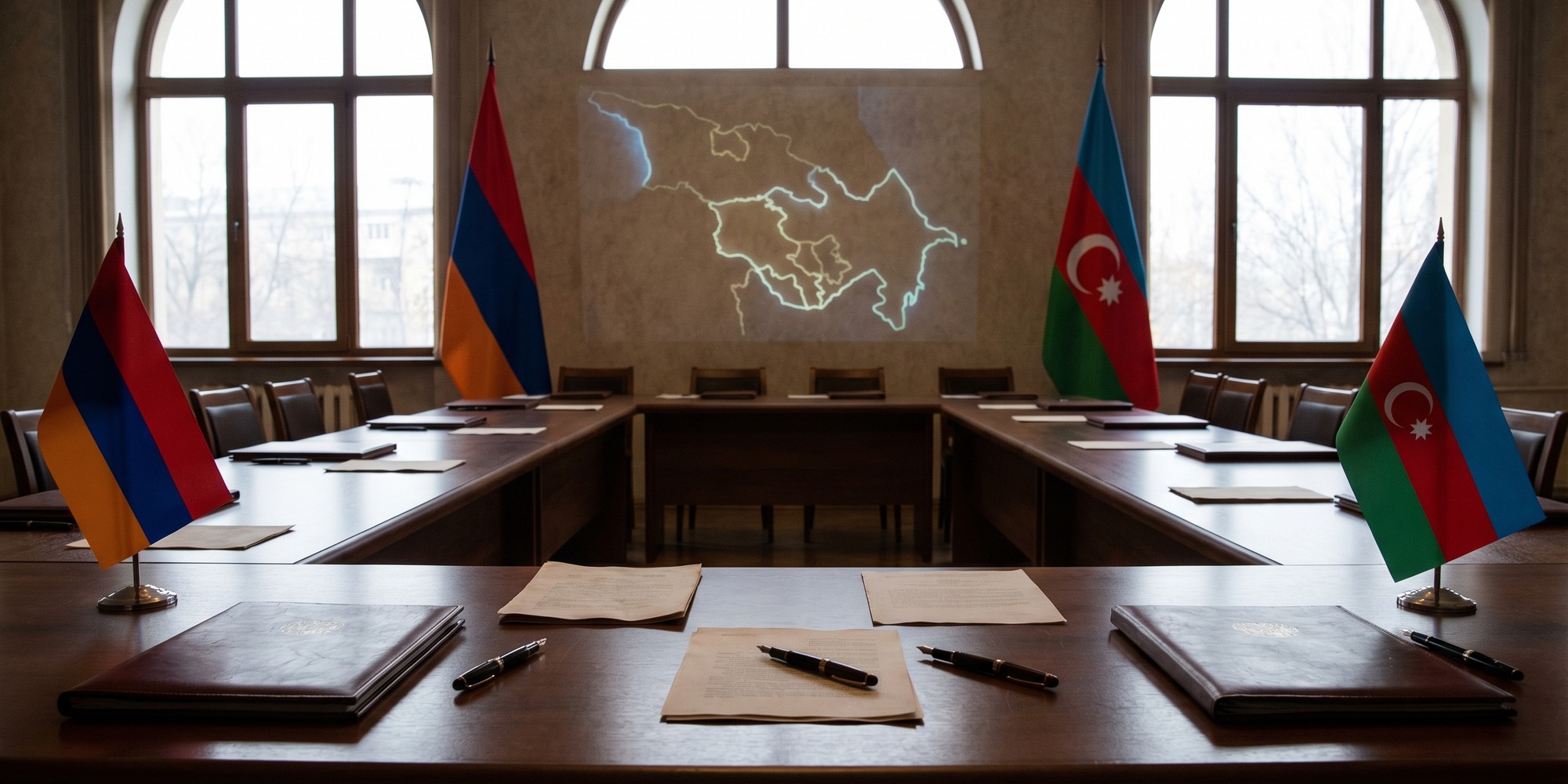
Armenia and Azerbaijan have reached a stage in peace diplomacy that often looks deceptively stable from the outside. On March 13, 2025, Armenia’s foreign ministry said the draft peace agreement had been agreed and was ready for signing. Azerbaijan’s foreign ministry issued its own statement the same day saying negotiations on the text were concluded, while reiterating additional conditions before signature (Azerbaijan MFA, No:105/25). Reuters reported that dual announcement as a breakthrough, but also noted uncertainty over timing of signature and entry into force (Reuters, March 13, 2025).
That paradox still defines the file in 2026. Text finalization is a legal milestone, but it is not the same as signature, ratification, or implementation. Those are separate political processes with separate veto points. The post-finalization period now centers on sequencing: which steps happen first, which happen in parallel, and what each side treats as proof that the other is implementing in good faith.
Key Takeaways
- Both sides announced on March 13, 2025 that negotiations on the peace draft text were complete.
- Armenia publicly framed the agreement as ready for signature, while Azerbaijan tied signature to additional constitutional and institutional conditions.
- The EU called the finalization a decisive step and signaled readiness to provide support if requested.
- The main diplomatic question in 2026 is implementation sequencing, not text drafting.
What Was Settled, and What Was Not
The March 2025 announcements resolved one narrow but important issue: whether the two governments could close negotiations on the wording of the core peace document. Armenia said it had accepted Azerbaijan’s proposals on the last unresolved articles and proposed a joint announcement of finalization (Armenia MFA statement). Azerbaijan confirmed completion of text negotiations and said it was ready for continued bilateral dialogue on normalization issues (Azerbaijan MFA statement).
But both statements also made clear that final text did not end political bargaining. Baku publicly linked signature to constitutional amendments in Armenia and to formal closure of OSCE Minsk Group structures (No:105/25). Yerevan, meanwhile, treated agreed text as sufficient basis to move directly to signing talks (Armenia MFA). That difference in interpretation is now the central implementation risk.
“The announcements represent a decisive step towards lasting peace and security in the region. It is key to keep this momentum and ensure smooth completion of this process...”
— EU High Representative/Vice-President statement on Armenia-Azerbaijan negotiations, March 2025
The EU’s framing is useful because it recognizes both realities at once: a genuine diplomatic advance and an unfinished process. Brussels has stated that it is ready to provide additional support and expertise if both sides request it (EEAS statement), but that support can only assist implementation design, not replace political decisions in either capital.
The 2026 Bottleneck: Sequencing and Domestic Legitimacy
Most peace-process delays after text finalization are not technical. They are domestic. Constitutional questions, ratification calendars, legal exposure, and institutional pride all shape whether leaders can convert a negotiated text into a binding settlement. In the Armenia-Azerbaijan case, the timeline problem is straightforward: if one side expects pre-signature concessions while the other expects signature first and implementation next, negotiations can stall without formally collapsing.
This is why the 2026 phase is best understood as an implementation architecture contest. The political objective in both capitals is to avoid appearing to concede first while still preserving a pathway to signature. Historically, this is where phased models matter, such as parallel workstreams on legal and institutional issues tied to clear verification points, rather than one side fully completing all preconditions before the other takes reciprocal steps.
External actors are relevant mainly as process stabilizers. European parliamentary leaders, in a March 2025 joint statement, welcomed conclusion of text negotiations and encouraged progress on border delimitation and communications reopening under sovereignty and reciprocity principles (European Parliament joint statement). That language aligns with implementation-first diplomacy: practical confidence-building that lowers incident risk while high-politics questions are managed.
Why This Matters Beyond the South Caucasus
The Armenia-Azerbaijan file is also being watched as a model for post-war treaty conversion, where mediators can help close text but cannot force domestic ratification behavior. That has implications for other U.S.- and EU-linked diplomacy tracks where formal agreement language may arrive before political consent for execution. Parallel debates over sequencing and leverage appear in U.S. sanctions diplomacy, including analysis tracked by US Foreign Policy.
The economics of implementation also matter. Border predictability and transport reopening can reduce corridor uncertainty, while prolonged ambiguity tends to preserve risk premiums in regional logistics and energy routing assumptions. Those spillovers are similar to market repricing patterns discussed in Global Market Updates and in cross-asset volatility coverage at US Market Updates.
None of this guarantees either rapid progress or breakdown. It does clarify the metric that matters most in 2026: not whether a finalized text exists, but whether negotiators can build a politically survivable sequence from draft to signature to implementation. If they can, the March 2025 milestone will look like the start of durable normalization. If they cannot, the region remains in a managed interim, with lower-intensity risk but no settled peace architecture.
For now, the clearest analytical conclusion is modest but significant. The peace file has moved beyond wording disputes and into execution politics. That is progress, but also the phase where most agreements fail. The challenge for both governments is to convert legal closure on paper into reciprocal, visible, and domestically defensible steps that make signature irreversible rather than symbolic.
The execution politics that now decide this file — signature sequencing, constitutional timelines, and whether a signed text can survive domestic constraint — are the same implementation risks tracked on the Armed Conflicts Map's Armenia–Azerbaijan conflict record.