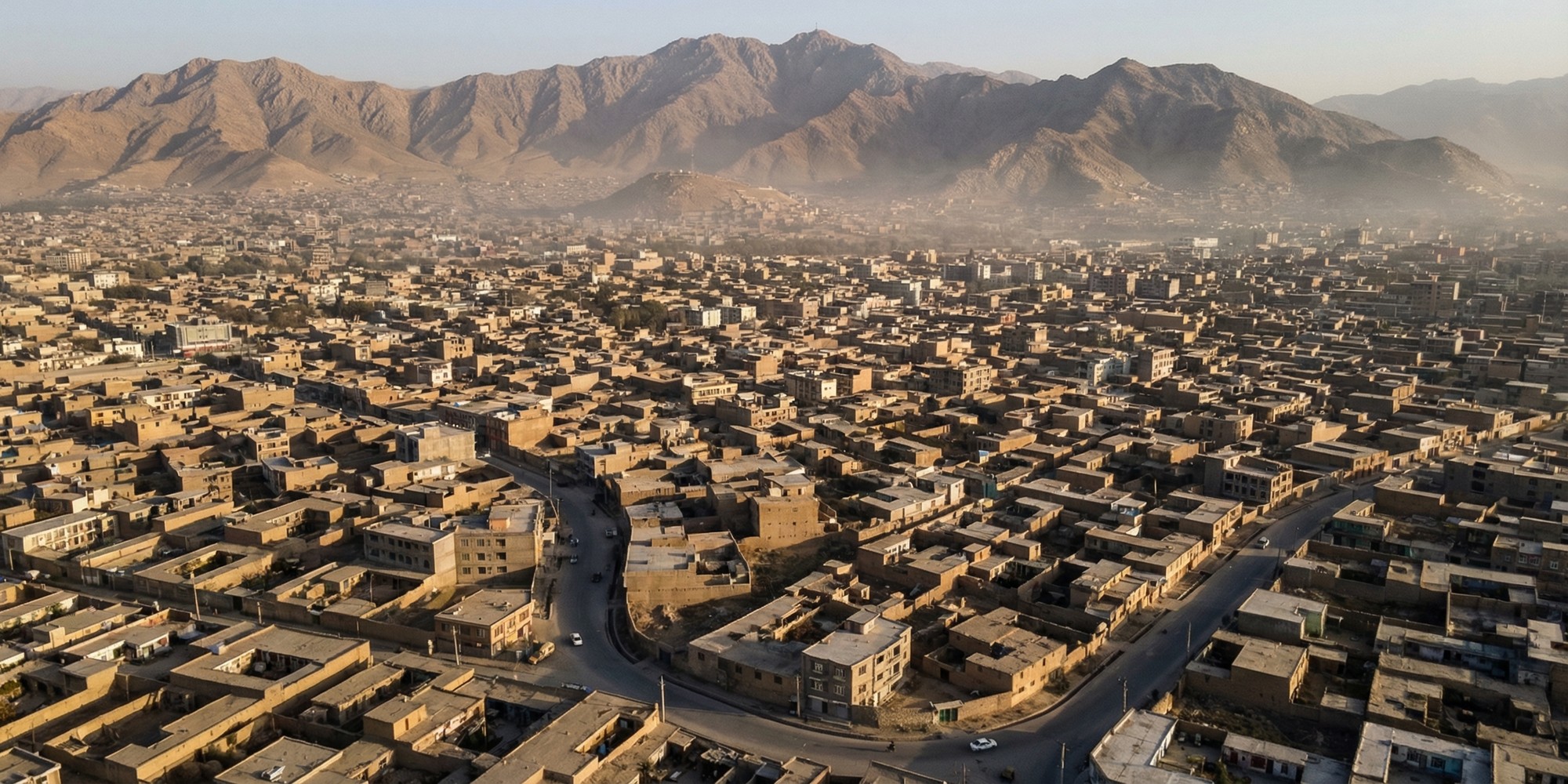
In the pre-dawn hours of March 17, Pakistani jets crossed into Afghan airspace and struck targets in Kabul and Nangarhar province — an act Islamabad described as precision counter-terrorism and Kabul condemned as a massacre. The strike on what the BBC had previously documented as a functioning drug rehabilitation center killed at least 143 people and injured 119, according to the UN Assistance Mission in Afghanistan (UNAMA), which dispatched teams to verify the site. It was the deadliest single day in a conflict that has been steadily escalating since February 2026 — and one that has received a fraction of the international attention lavished on the Iranian theater of war.
The strike immediately detonated a propaganda battle as fierce as the physical one. Taliban spokesman Zabihullah Mujahid posted his government's account within hours; Pakistan's Ministry of Information Broadcast (MOIB) stamped the post "Propaganda" on social media almost as quickly. Both governments have made this digital counter-narrative as central to their war as the airstrikes themselves — a defining feature of a conflict fought as much in the information space as on the ground.
Key Takeaways
- Pakistan's March 17 airstrike on Kabul killed at least 143 people, according to UNAMA verification — the highest single-day toll since fighting resumed in February 2026.
- Both governments are waging an aggressive social media narrative war, with Pakistan's information ministry labeling Taliban press releases "propaganda" within hours of each statement.
- A fragile Eid al-Fitr ceasefire brokered by Saudi Arabia, Qatar, and Turkey holds — but both sides have traded accusations of violations since it began.
- International diplomatic attention is stretched thin amid the Iran conflict, leaving South Asia's fastest-escalating armed dispute without a credible multilateral mediator.
"A Crime Against Humanity" vs. "Precision Targeting"
Pakistan's military maintained its standard line: the strikes hit "military installations and terrorist support infrastructure," including logistics for both the Afghan Taliban and the Tehrik-i-Taliban Pakistan (TTP) — a group Islamabad has branded "Fitna al-Khawarij" in an effort to delegitimize it religiously. Lieutenant General Ahmed Sharif Chaudhry, the military's chief spokesman, offered a characterization of the rehabilitation center that the BBC and independent observers found wholly unsubstantiated: that the facility was used to recruit and prepare suicide bombers from among its patients. No evidence was presented publicly.
"The Pakistani military regime has once again violated Afghanistan's airspace and targeted a drug rehabilitation hospital in Kabul, resulting in the death and injury of addicts who were undergoing treatment."
— Zabihullah Mujahid, Taliban Spokesperson, March 17, 2026
The Taliban's initial casualty count — 400 or more — was contested by Pakistani officials who called it disinformation. UNAMA's independent verification settled on 143 confirmed deaths and 119 injured, though the mission noted that conditions on the ground made a comprehensive count difficult. The BBC had reported from the rehabilitation center in 2023, interviewing patients receiving addiction treatment; that prior documentation formed part of the international pushback against Pakistan's characterization.
What distinguishes this phase of the conflict from earlier exchanges is the speed and aggression of the information operations. Pakistan openly claimed the March 17 strikes — a departure from the studied ambiguity with which it treated operations in October 2025. Islamabad's information minister posted footage of strike sites on social media within hours. The Taliban responded in kind. This symmetry of digital assertion has made the conflict more visible internationally while simultaneously making facts harder to establish: both sides are simultaneously combatants and publishers in the same information space.
Roots of the Conflict: TTP, Sovereignty, and the India Accusation
The immediate trigger for Pakistan's latest campaign is the TTP. The Centre for Research and Security Studies in Islamabad recorded 2025 as the most violent year for militant attacks on Pakistani soil in over a decade, with the TTP — operating largely from Afghan territory — responsible for the majority. Pakistan has demanded that the Taliban dismantle TTP infrastructure, extradite its leadership, and cease providing safe haven. The Taliban, committed to a policy of non-interference in Pakistani internal affairs that nonetheless permits TTP operational space, has refused.
Pakistan's prime minister's spokesman Mosharraf Zaidi articulated Islamabad's position with unusual bluntness: "Pakistan does not have a militancy problem. Pakistan does have an Afghan-Taliban regime problem." The Taliban frames every Pakistani strike as a violation of Afghan sovereignty. Taliban Defence Minister Mullah Yaqoob warned in language that left little diplomatic ambiguity: "They should not think they can martyr people in Kabul, destroy the city and disturb its security while remaining safe in Islamabad."
Pakistan has also leveled accusations against India, claiming New Delhi is covertly supporting militant networks inside Pakistan — an allegation India flatly denies, and that the Taliban has similarly rejected. The charge complicates an already opaque conflict by introducing a third-state dynamic that neither side can easily verify or adjudicate. The drone strike on Islamabad that preceded the March 17 airstrike — intercepted by Pakistan's air defenses but described by its president as a "red line crossed" — demonstrated that the Taliban is both willing and now capable of striking Pakistani territory directly.
The Fragile Eid Pause
Into this combustible environment, Saudi Arabia, Qatar, and Turkey inserted themselves as mediators, pressing both sides to observe a ceasefire over Eid al-Fitr. Both governments agreed to a pause in operations — and both have already exchanged accusations of violating it. The structure of mediation reflects the Gulf states' interest in South Asian stability and their longstanding relationships with both Islamabad and Kabul, but the gap between a ceasefire announcement and a durable political framework remains enormous.
Taliban Supreme Leader Hibatullah Akhundzada's Eid message contained little that suggested flexibility: "If someone bombs us or fires rockets at us... by God nothing will change in us." Pakistan's government, facing domestic political pressure from a public exhausted by militant violence, has framed negotiations as a reward for bad behavior that it cannot afford to offer. "There is nothing to talk about," Pakistani officials told regional media — a posture that may serve domestic audiences but forecloses the diplomatic space the Gulf mediators are trying to open. As analysts covering the broader pattern of US sanctions on regional actors at US Foreign Policy have noted, external pressure on conflict parties often requires sustained multilateral engagement that no single mediator can currently provide in South Asia.
Implications: An Underreported War at a Dangerous Moment
The Afghanistan-Pakistan conflict is escalating at perhaps the worst possible moment for international crisis management. The world's diplomatic bandwidth is consumed by the Iran war — a conflict that is itself drawing in NATO partners, Gulf states, and the UN Security Council simultaneously. South Asia's crisis has no equivalent multilateral architecture. UNAMA remains in place and has demonstrated its value as an independent verification body, but its mandate does not extend to conflict mediation, and the UN's political attention is focused elsewhere.
The economic implications of a protracted Pakistan-Afghanistan confrontation are not trivial either. Pakistan remains a nuclear-armed state with a fragile economy dependent on IMF support; a prolonged military campaign strains budgets already under severe pressure. Meanwhile, markets tracking the Iran conflict's energy implications have largely not priced in a parallel South Asian escalation — a gap that may close uncomfortably if the Eid ceasefire collapses entirely.
The Eid pause may hold long enough for mediators to establish a channel. But the structural conditions driving the conflict — Pakistan's legitimate security grievances against TTP, the Taliban's refusal to act against a group it politically tolerates, and both governments' domestic incentives to appear resolute — have not changed. What has changed is the willingness of both sides to fight openly, claim their strikes publicly, and contest the information space as aggressively as the airspace. That shift toward transparency-in-conflict, paradoxically, may make resolution harder by locking each government into positions that are now on the record and harder to quietly abandon.
For a region with two nuclear powers, three active mediators, and no credible ceasefire enforcement mechanism, the trajectory is deeply concerning — and the international community's limited attention span for a second war is not a factor that either Islamabad or Kabul can afford to rely upon indefinitely.