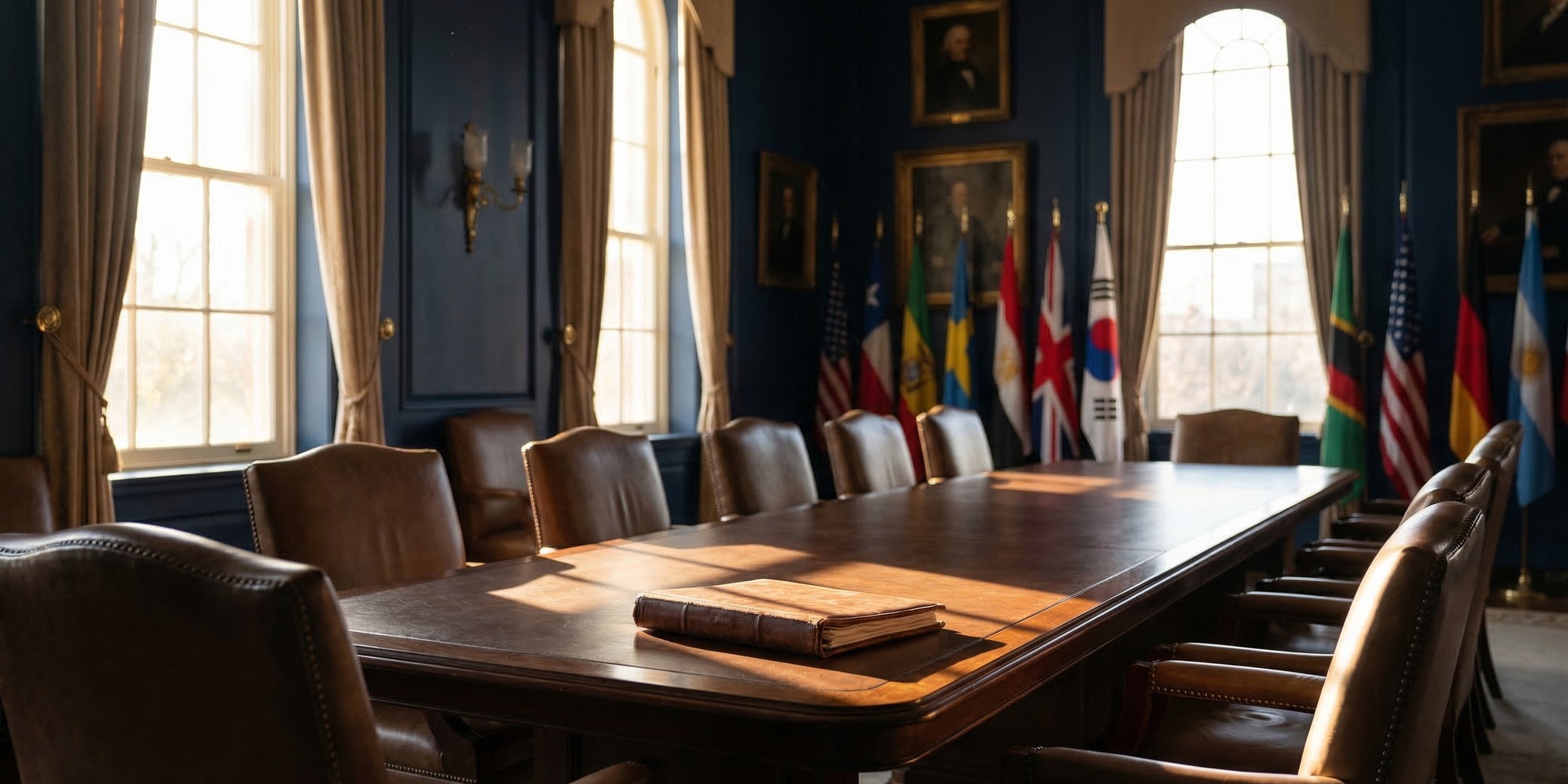
On the evening of February 26, 2026, a small gathering convened at Oman's ambassadorial residence in Cologny, on the shores of Lake Geneva. Among those present were US Middle East envoy Steve Witkoff, senior adviser Jared Kushner, Iranian Foreign Minister Abbas Araghchi, IAEA Director-General Rafael Grossi, and — quietly observing — British National Security Adviser Jonathan Powell. By the meeting's end, Powell had formed a considered judgment: Iran's seven-page written offer, presented with an annexe and unprecedented procedural formality, was significant. It warranted a follow-up session. A Vienna meeting was pencilled in for March 2.
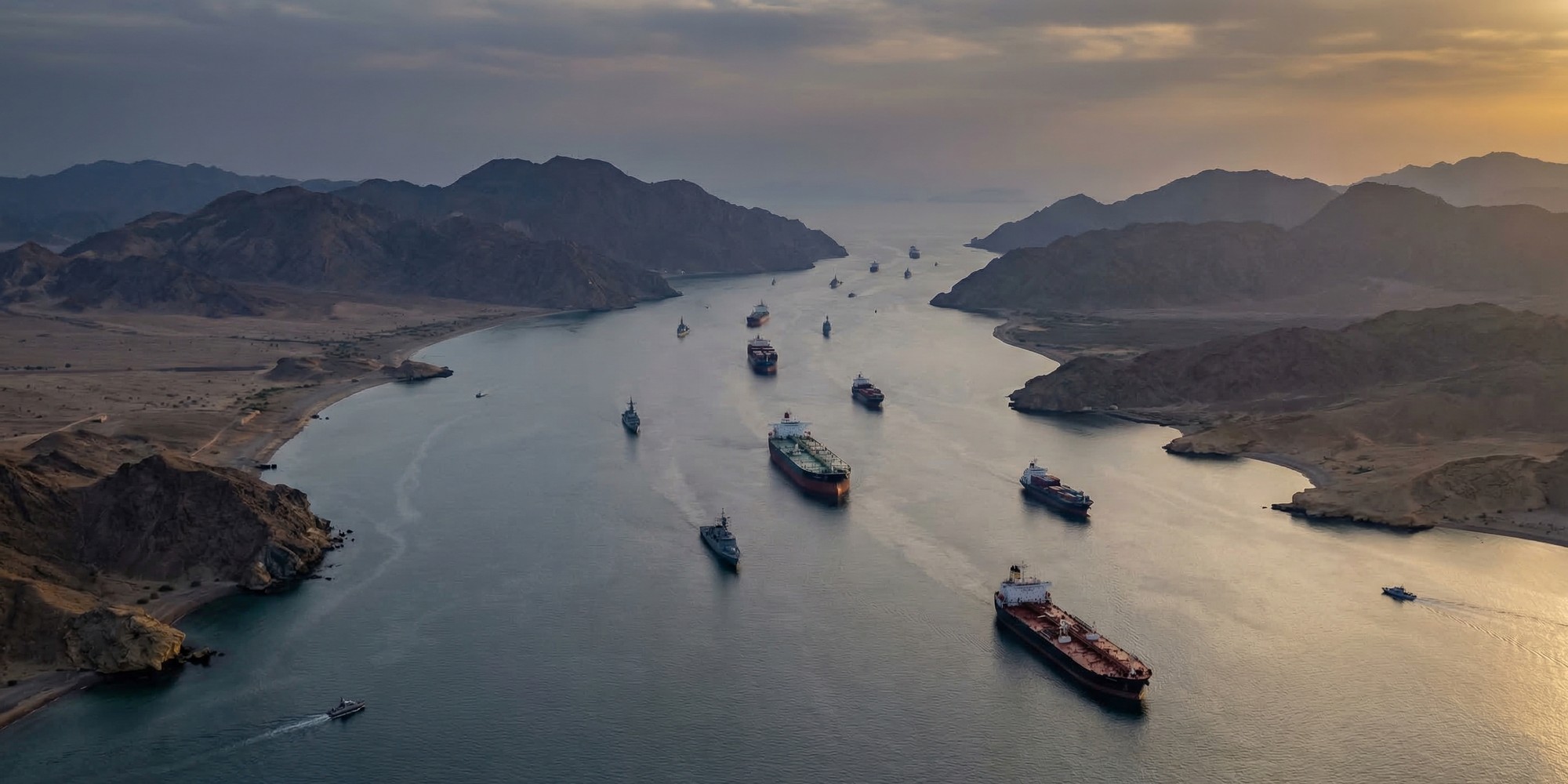
That session never happened. Forty-eight hours after the Geneva talks concluded, the United States and Israel launched Operation Epic Fury. Eighteen days into the resulting war, the Strait of Hormuz remains disrupted, WTI crude has approached $98 per barrel, and the question of whether any diplomatic off-ramp still exists has become one of the most consequential in contemporary international affairs.
Key Takeaways
- Britain's National Security Adviser Jonathan Powell attended the February 26 Geneva talks and judged Iran's written offer "worth pursuing" — yet Operation Epic Fury launched 48 hours later.
- The US delegation brought no nuclear technical experts to Geneva; Witkoff's team included an essayist with no Iran nuclear specialism, and misunderstood key elements of Iran's nuclear programme.
- Iranian FM Araghchi has reportedly sent text messages to Witkoff proposing a ceasefire — contact Iran publicly denies — marking the first direct back-channel communication since the war began.
- The new Iranian leadership under Mojtaba Khamenei has not reaffirmed the fatwa banning nuclear weapons, raising the stakes of any future negotiations significantly.
What the Geneva Talks Revealed
The February 26 session was the culmination of a months-long diplomatic track that had gathered unexpected momentum in early 2026. According to reporting by The Guardian, Powell's presence at Cologny was not ceremonial — he brought a Cabinet Office technical expert and engaged substantively with Iran's written proposal. Powell's assessment was that the offer was not a complete deal, but that it constituted a credible basis for the Vienna round. Kushner would later acknowledge, in a post-war account, that a deal "better than the 2015 Obama deal" had been within reach.
Iran's delegation had taken an unusual step in submitting a formal written offer with an annexe — a procedural formality that signals seriousness in diplomatic practice and is uncommon in preliminary-stage talks. Araghchi, a career diplomat who served as deputy foreign minister during the original JCPOA negotiations, was described by observers as arriving prepared. Yet the written document never formally transferred to the US side: Iran declined to hand it over, reportedly concerned that Witkoff might publish its contents on Truth Social before any framework was agreed — a concern that multiple analysts, including Kelsey Davenport of the Arms Control Association, noted was consistent with the administration's prior conduct.
The Anatomy of Diplomatic Failure
A detailed reconstruction of the Geneva session, published by The Guardian on March 18, points to systemic failures on the US side that complicated the talks before they began. Witkoff had allocated just 3.5 hours to the Iran sessions on February 17 — after scheduling a separate Ukraine meeting the same day — signalling a timetable incompatible with the complexity of the nuclear dossier. No US nuclear technical team accompanied the delegation to Geneva. The technical counterpart Witkoff brought was Michael Anton, a political essayist with no specialisation in Iranian nuclear issues. In at least one media interview, Witkoff referred to the Strait of Hormuz as the "Gulf of Hormuz," a misstatement that circulated among Gulf diplomatic contacts and raised questions about the delegation's preparation.
There were substantive misunderstandings as well. The US side is reported to have misjudged the Tehran Research Reactor's enriched uranium requirements and held an incomplete picture of Iran's declared civilian nuclear programme — gaps that, in the view of technical observers, would have made it difficult to assess the Iranian offer on its merits. Araghchi, aware of these limitations, reportedly calibrated how much technical detail to share given uncertainty about how it would be used.
The competing accounts of the talks' failure are sharp. Witkoff, in his post-war framing, has described the Iranians as having "smelled fishy" and being "full of subterfuge." Gulf diplomatic contacts cited in reporting from The Guardian and Responsible Statecraft offer a starkly different view — one characterising Witkoff and Kushner as "Israeli assets that conspired to force the US president into a war from which he is now desperate to get himself out." Neither account can be verified independently, and the full diplomatic record remains contested.
My last contact with Mr. Witkoff was prior to his employer's decision to kill diplomacy with another illegal military attack on Iran.
— Iranian Foreign Minister Abbas Araghchi, responding to reports of back-channel contact, March 2026
The Back-Channel and What Comes Next
Despite Iran's public denials of ongoing contact, Axios reported on March 17 that Araghchi had sent text messages directly to Witkoff proposing a cessation of hostilities — the first known direct communication between the two sides since Operation Epic Fury began. The report was corroborated by multiple outlets citing the same sourcing chain. Iran's Foreign Ministry issued a public denial the same day, with Araghchi's statement positioning any past contact as categorically pre-war.
Witkoff, for his part, briefed a small bipartisan group of US senators on March 17 on the war's status — a session that itself reflected mounting congressional concern about the conflict's trajectory and the absence of a clear endgame. The administration faces pressure on multiple fronts: the UK-US relationship is described as being under "unprecedented strain" following London's judgment that the strikes were unlawful, NATO allies have rejected US pressure to contribute warships to Hormuz operations, and Washington's effort to leverage the Xi summit over China's stance on Iran has so far produced no movement from Beijing.
The economic dimension of the standoff is growing increasingly difficult to contain. The Strait of Hormuz disruption has effectively removed approximately 20% of global oil supply from predictable routing. Five major central banks have been forced to hold or adjust policy in response to the oil price shock — a dynamic that, as analysis at Global Market Updates details, reflects the degree to which the Iran war has become a global macroeconomic event, not merely a regional security crisis. The economic pressure on Iran is severe, but secondary sanctions and the oil disruption mean the costs are distributed across the international system as well. US equity markets have been tracking the conflict closely; any credible ceasefire signal would represent a significant inflection point, as market analysts have noted in assessing the tentative two-day S&P 500 rally that followed the initial reports of back-channel contact.
The Fatwa Question and the Path Forward
Any future negotiations face a complication that did not exist before the war: the question of Iran's supreme leadership. Reports indicate that Iran's previous Supreme Leader, Ali Khamenei, was killed in the initial strikes of Operation Epic Fury. His reported successor, Mojtaba Khamenei, has not publicly reaffirmed the religious fatwa issued by his predecessor declaring nuclear weapons forbidden under Islamic law — a fatwa that, while not legally binding in the Western sense, functioned as a foundational element of Iran's public posture in all previous nuclear negotiations. Its status under new leadership is unknown.
The implications are significant. Prior to Geneva, US and European negotiators could reference the fatwa as an Iranian self-constraint that simplified certain aspects of verification discussions. If the new leadership declines to reaffirm it — or if Iran's domestic political situation following the war has shifted the calculus on nuclear deterrence — the architecture of any potential agreement would need to be substantially reconceived. Iranian protesters outside the Foreign Ministry in Tehran, photographed and reported in multiple outlets, have carried banners reading "no return to talks with America," suggesting the domestic political space for renewed diplomacy may be narrowing even as back-channel communications appear to resume.
Eighteen days into a conflict that diplomats on multiple sides believed could have been avoided, the Geneva episode stands as a case study in how the gap between available diplomatic space and the political will to use it can close faster than actors anticipate. The question is whether the text messages now reportedly exchanged between Araghchi and Witkoff represent the beginning of a genuine off-ramp negotiation, or simply a messaging exercise — on both sides — designed to manage domestic and international perception in a conflict whose trajectory remains unresolved.