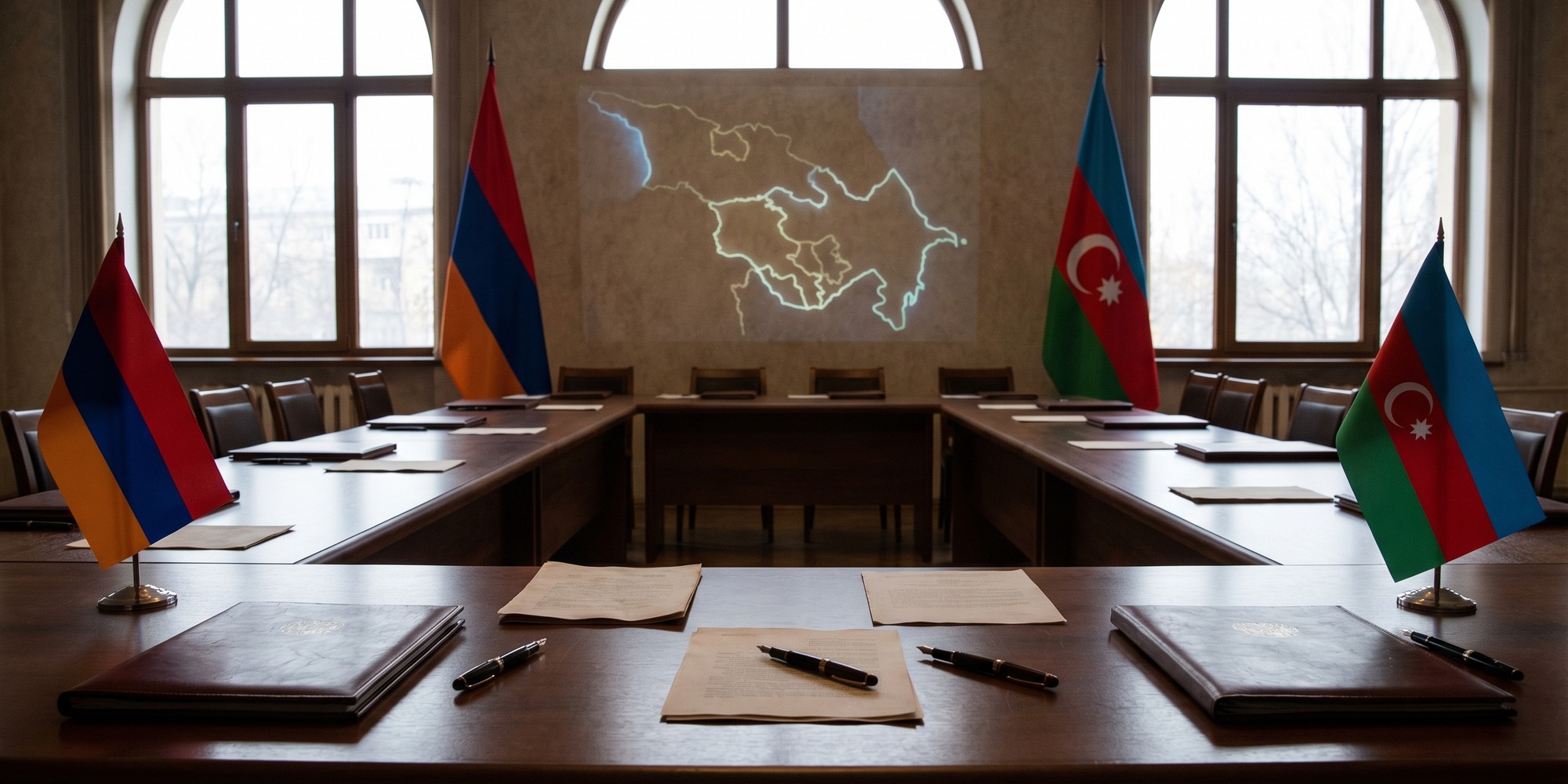
Armenia and Azerbaijan have reached a point that usually marks the end of peace talks, then discovered it is only the midpoint. On March 13, 2025, Armenia’s foreign ministry said the peace agreement text was finalized and ready for signature, while Azerbaijan’s foreign ministry said negotiations on the text were concluded. Reuters reported the same day that both governments confirmed the text was agreed, but that Baku linked signature to Armenian constitutional changes (Reuters, March 13, 2025).
That sequence, text complete but signature pending, remains the central diplomatic fact. In August 2025, the two sides published the initialed text with 17 treaty articles, including sovereignty recognition, non-use of force, border mechanisms, and an implementation commission (Armenia MFA publication, Aug. 11, 2025; Reuters, Aug. 11, 2025). The remaining dispute is no longer what the treaty says, but what must happen before it can enter into force and be implemented without immediate reversal.
Key Takeaways
- Both governments said in March 2025 that negotiations on the peace text were complete, but they diverged on signature preconditions.
- The published draft commits both states to sovereignty recognition, non-use of force, and a bar on third-party force deployment along the border.
- Article XV creates a one-month deadline after entry into force to withdraw or settle interstate legal claims tied to pre-agreement disputes.
- The practical test in 2026 is sequencing, constitutional, legal, and security implementation, not text drafting.
What the Draft Treaty Actually Changes
The initialed text is legally dense and intentionally front-loaded. Article I anchors mutual recognition of sovereignty, territorial integrity, and inviolability of international borders. Article II states that neither side has territorial claims against the other and will not raise such claims later. Article III commits both parties to refrain from force or threat of force in line with the UN Charter. Together, these clauses convert an armed territorial dispute into a treaty-based non-claim framework.
“The Parties, in their mutual relations, shall refrain from the use of force or the threat of use of force… They shall not allow any third Party to use their respective territories for using force against the other Party inconsistent with the UN Charter.”
— Article III, initialed Armenia-Azerbaijan agreement text (published Aug. 11, 2025)
The text also builds an implementation architecture. Article XIII establishes a bilateral commission to oversee implementation, and Article XIV sets a dispute pathway beginning with consultations, then broader peaceful settlement options if no result is reached within six months. That matters because the border question did not disappear with text completion. Article VI still requires good-faith work through border commissions on delimitation and demarcation.
This is where the agreement reads less like a ceremonial end-point and more like an operating manual. A signed treaty would begin, not finish, a high-friction process: setting diplomatic relations timelines, moving security and confidence-building measures from paper to patrol patterns, and preventing incremental incidents from being reframed as treaty breach.
The Signature Gap: Politics Before Ratification
The main bottleneck remains constitutional sequencing. Azerbaijan’s March 2025 statement called constitutional amendment in Armenia a prerequisite for signing (Azerbaijan MFA), and Reuters reported that this condition continued after the text was published (Reuters, Aug. 11, 2025). Armenia has publicly disputed territorial-claim allegations in its existing text while also debating constitutional changes domestically (Reuters, March 13, 2025).
A second friction point is the clause on third-party forces along the bilateral border. The published treaty text bars such deployment, and that intersects directly with existing monitoring architecture. The EU mission in Armenia says it operates on Armenia’s side of the recognized border and has a mandate extended through February 2027 (EEAS, EUMA mission page). In practice, implementation will require both sides to agree how treaty language and current monitoring realities can coexist without reopening security escalation dynamics.
The political economy of this stage is often underestimated. A text can be balanced enough to initial, yet still difficult to ratify if each capital has to show that legal compromise does not equal strategic loss. That tension is not unique to the South Caucasus, but the speed and durability of this process may influence how other mediation tracks are structured, including US-backed sequencing debates followed by US Foreign Policy.
Why Implementation, Not Symbolism, Will Decide Outcomes
Article XV may become the treaty’s hardest operational test. It requires both parties, within one month after entry into force, to withdraw, dismiss, or settle interstate legal claims and disputes connected to pre-agreement issues in legal forums. This is ambitious conflict de-escalation by legal design. It can reduce parallel-lawfare incentives, but only if domestic institutions can process withdrawals quickly and with political backing.
Economic and transit implications also hinge on implementation quality. The agreement’s cooperation article allows additional deals in transport and transit, which could alter corridor calculations in the South Caucasus if stable border procedures follow. That is why market observers are likely to track not just signature headlines but follow-on mechanics, similar to regional risk repricing frameworks covered by Global Market Updates and broader geopolitical pass-through monitored by US Market Updates.
The near-term conclusion is straightforward. Armenia and Azerbaijan have crossed the drafting threshold and published a detailed legal framework. But until constitutional sequencing, border-force interpretation, and Article XV legal withdrawals are synchronized, the process remains a negotiated truce architecture rather than a fully operational peace regime. The signature gap, then, is not a procedural delay — it is the treaty's core strategic phase.
Until those remaining legal conditions move together, the gap between a finalized text and a durable settlement is the same unfinished architecture documented on the Armed Conflicts Map's Armenia–Azerbaijan conflict page.