The race to choose the next United Nations secretary-general has moved from speculation to formal procedure. Reuters reported on March 26 that candidacies are now public, vision statements are being filed, and interactive dialogues are scheduled before Security Council straw polls begin (Reuters, March 26, 2026). The winner will start a five-year term on January 1, 2027.
The practical significance is that the process now combines two tracks that often move at different speeds: a more open General Assembly-facing process and the same closed-door veto politics inside the Council. UN guidance describes the 2026 cycle as transparency-focused, with campaign financing disclosures and webcast dialogues, while still anchored in the Charter framework that gives final gatekeeping power to the Council’s permanent five members (UN Selection and Appointment page).
Key Takeaways
- The UN says the 2026 process is governed by General Assembly resolution 79/327 and begins with a joint letter from the Assembly and Security Council presidents.
- Candidates must submit vision statements, CVs, and campaign financing disclosures that are published as part of the formal process.
- Reuters reports that public dialogues are scheduled, but the decisive stage remains Security Council straw polling and veto acceptance.
- The institutional design now offers greater public scrutiny without changing the Charter’s core appointment rule.
What Has Changed in the 2026 Cycle
On paper, this is the most structured and publicly documented race for the top UN post so far. The UN’s official selection portal says the process is based on General Assembly resolutions and “guided by the principles of transparency and inclusivity,” with nominations, disclosed campaign financing, and interactive dialogues all published in one place (UN process page). The Secretary-General’s office separately notes that the process is now explicitly tied to General Assembly resolution 79/327 and Article 97 of the Charter (UN Secretary-General appointment process).
“The Secretary-General is appointed by the General Assembly upon the recommendation of the Security Council.”
— United Nations Charter, Article 97 (via UN appointment process page)
That sentence is the constitutional center of gravity. It means transparency reforms can shape candidate quality, legitimacy, and diplomatic expectations, but cannot bypass the veto logic that determines final viability. Reuters’ candidate tracker coverage reflects that reality: multiple names can campaign publicly, but the shortlist only survives if the permanent members do not block it (Reuters).
The Security Council Bottleneck Still Decides Outcomes
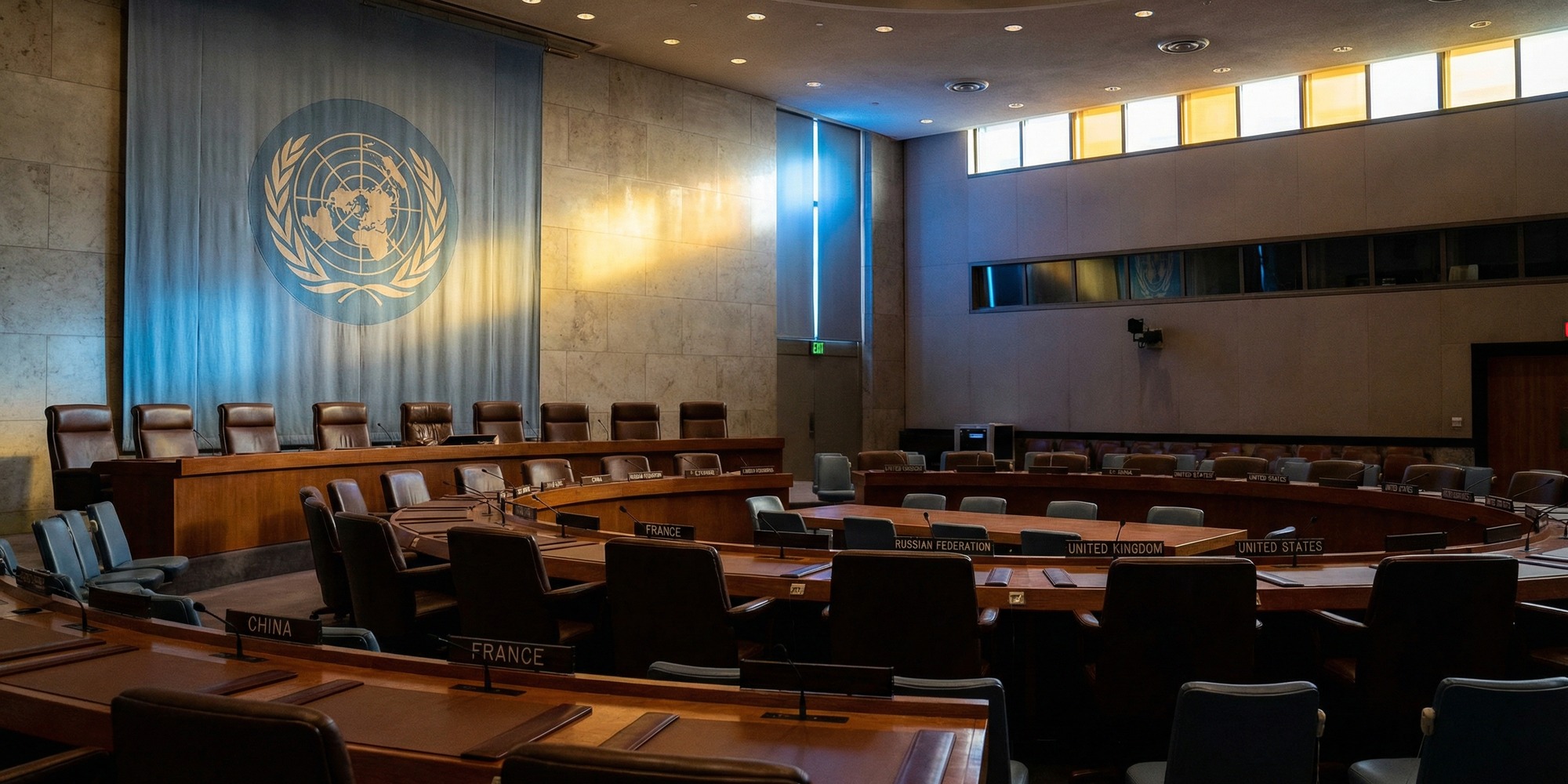
In practical terms, the selection process is still a two-stage filter. The first stage now has greater visibility. Governments submit nominations, candidates issue policy statements, and states can question contenders in webcast dialogues. The second stage, however, remains Council-centered and opaque: straw polls continue until a name can command at least nine votes and avoid a veto from the United States, China, Russia, the United Kingdom, and France, according to Reuters and long-standing Council practice (Reuters).
Latest: as of 10 October 2026 the Council is inside that straw-poll stage and has not published a recommendation. How the ballots work, including colour-coding, is in Straw Polls, Colour-Coded Ballots and the Veto.
For diplomats, that creates a familiar strategic balance. Publicly, states can support candidates who align with regional rotation preferences, gender representation pressure, or reform rhetoric. Privately, they will still test whether a candidate is “veto-safe” across the P5. This is why the process can appear open in form while remaining constrained in outcome.
The 2026 framework also increases reputational costs for weak or symbolic campaigns. Because financing disclosures and vision statements are published on an official UN page, delegations can compare candidates on management priorities, conflict prevention posture, and reform sequencing before private Council negotiations begin (UN selection process). That does not eliminate geopolitical bargaining, but it does narrow space for opaque candidacies that lack operational plans.
At the same time, public transparency can raise expectations that the process itself cannot fully satisfy. Member states and civil society audiences can now follow candidates in near real time, yet they still have limited visibility into late-stage veto signaling. The result is a recurring legitimacy gap: transparency improves participation in early rounds, while final decision authority remains concentrated in a format designed around major-power consent.
The broader institutional context also matters. Reuters has reported persistent UN funding stress and political pressure over assessed contributions, including remarks by General Assembly President Annalena Baerbock urging full and timely payments (Reuters, Feb. 24, 2026). Any incoming secretary-general will therefore inherit not only conflict management responsibilities, but a legitimacy and financing challenge that can limit policy execution from day one.
Why This Matters Beyond UN Headquarters
The secretary-general does not control sanctions or military authorizations, but the office can influence agenda-setting, mediation sequencing, and crisis signaling. In that sense, leadership selection has second-order effects on alliance behavior and conflict diplomacy, including US partner calculations tracked by US Foreign Policy. It also affects risk sentiment around geopolitical shock events, a dynamic visible in energy and rates positioning covered by Global Market Updates and US macro-sensitive assets followed by US Market Updates.
The diplomatic test for 2026 is therefore not whether reforms made the process fully open, because the Charter does not permit that. The test is whether procedural transparency improves confidence in the eventual choice and reduces perceptions that outcomes are shaped exclusively by private great-power bargaining.
So far, the answer is mixed but meaningful. The candidate pipeline is more visible than in previous cycles, and formal disclosure requirements create a clearer baseline for accountability. Yet the endgame remains what it has always been: a political negotiation among the veto powers, followed by a General Assembly vote that formalizes consensus once it has already been constructed.
For member states, this means the critical window is now, before straw poll dynamics harden. Once Council preferences consolidate, public diplomacy has less room to alter the final trajectory. The 2026 race has opened under new rules, but the old power arithmetic is still in force.