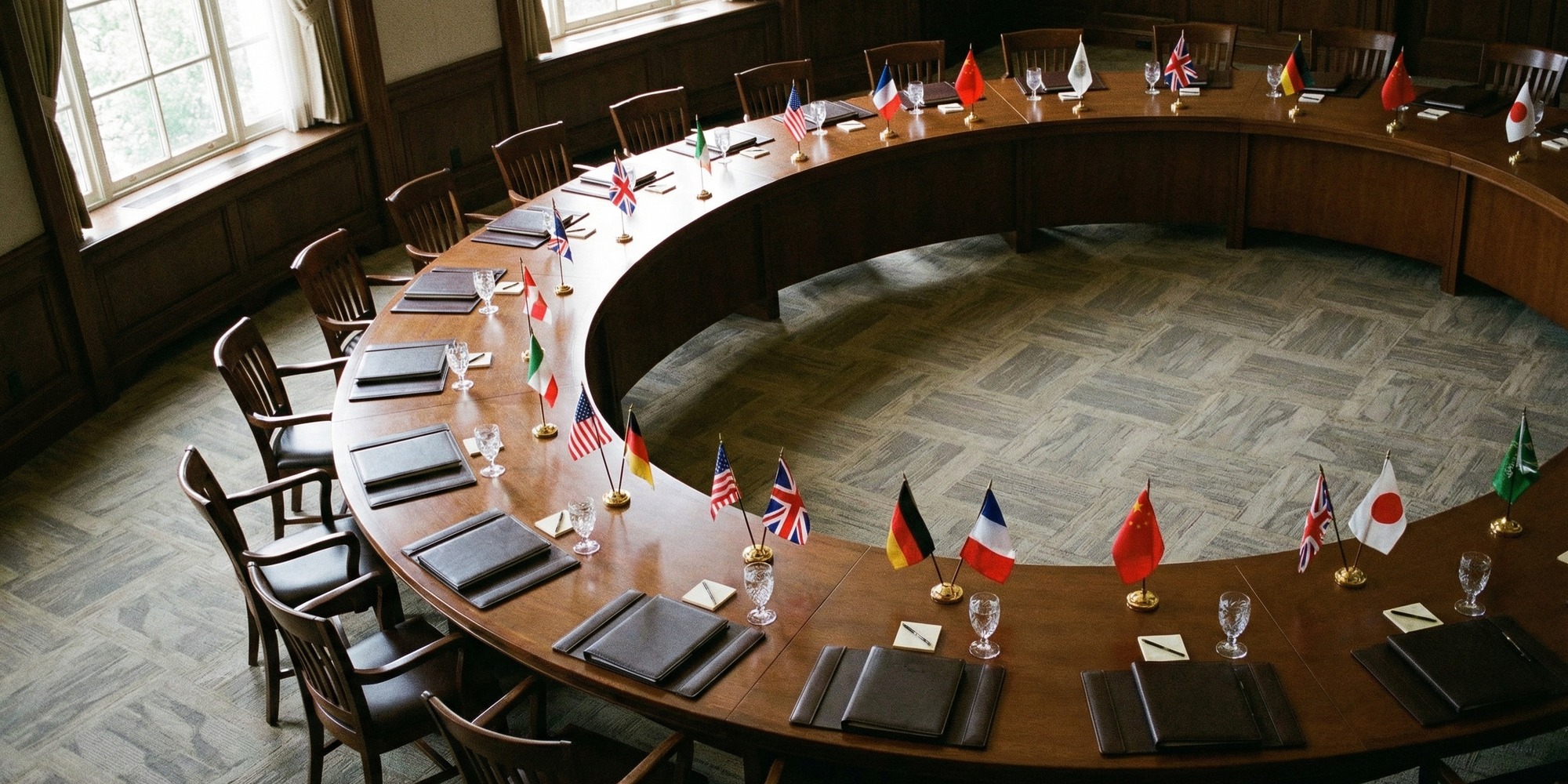
Australian Prime Minister Anthony Albanese and European Commission President Ursula von der Leyen signed a landmark free trade agreement in Canberra on Tuesday, March 24, 2026 — formally concluding eight years of negotiations and creating a bilateral trade framework valued at approximately A$10 billion (roughly USD $7 billion). The signing ceremony was accompanied by two parallel agreements: a Security and Defence Partnership covering counter-terrorism, maritime security, space cooperation, and defence industry collaboration; and a critical minerals partnership centred on lithium and tungsten supply chains. Together, the three documents mark a qualitative shift in the Australia-EU relationship — from a trade partnership of modest depth to a strategic alignment with institutional anchors.
The backdrop to Tuesday's ceremony is as significant as the ceremony itself. When formal negotiations launched in 2018 under then-Prime Minister Malcolm Turnbull, few anticipated that a geopolitical rupture — rather than traditional negotiating obstacles such as agricultural quotas — would come closest to ending the process permanently. The deal's eventual conclusion is, in part, a story of diplomatic repair after near-catastrophic breakdown.
Key Takeaways
- Australia and the EU signed a free trade agreement on March 24, 2026 — eight years after formal talks began — removing tariffs on nearly all agricultural and manufactured goods in both directions.
- The deal was signed alongside a Security and Defence Partnership covering defence industry, counter-terrorism, space, and maritime security — signalling EU strategic engagement with Australia well beyond trade.
- A critical minerals cooperation agreement on lithium and tungsten was announced simultaneously, directly addressing EU supply-chain diversification goals under its 2024 Critical Raw Materials Act.
- Australian beef producers secured a 30,000-tonne annual export quota — significantly below the 50,000+ tonnes the industry had sought — creating domestic political friction ahead of parliamentary ratification.
What the Deal Actually Does
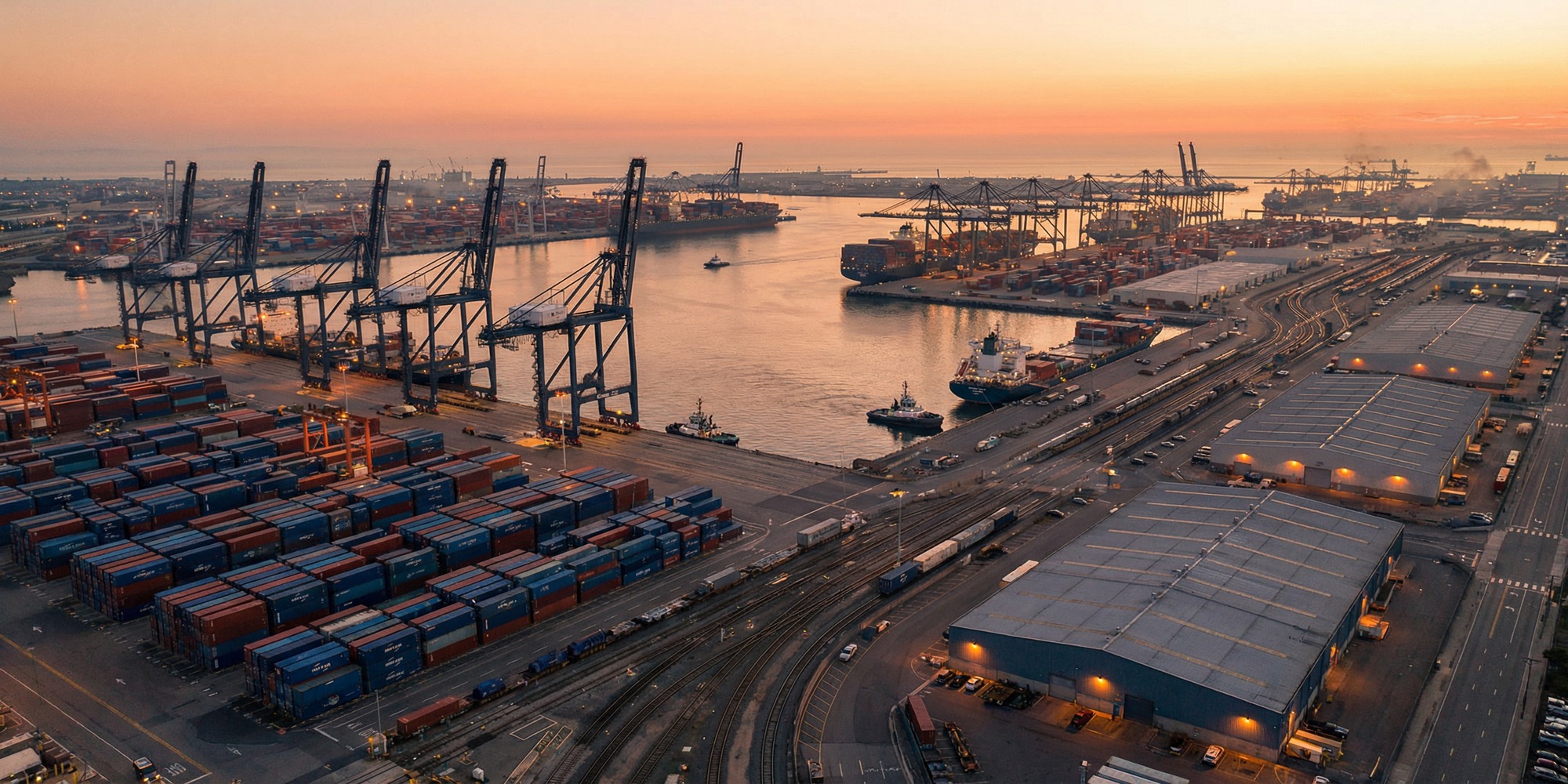
The European Commission describes the agreement as removing tariffs on almost all EU goods entering Australia and lifting almost all EU tariffs on Australian agricultural products. Australian wine producers stand to save approximately A$37 million annually. Wine, fruit, vegetables, seafood, olive oil, wheat, barley, most dairy, and a range of processed foods are included in the agricultural liberalisation schedule. For European manufacturers, the elimination of Australian industrial tariffs on machinery, pharmaceuticals, and chemicals opens a high-income market of 27 million people with minimal competitive barriers.
The agreement's most politically contentious provision involves beef. Australian producers were allocated a 30,000-tonne annual import quota into the EU — up substantially from the current 3,389 tonnes, but well short of the 50,000-plus tonnes the industry had sought. Andrew McDonald, CEO of Meat and Livestock Australia, was direct in his assessment: "This is unquestionably a missed opportunity for Australia's red meat producers, processors and exporters." The shortfall reflects the EU's sensitivity to its agricultural lobby and suggests beef quota expansion will be a recurring pressure point through the ratification process and any future review clauses.
Geographic indications — the EU's system of protecting product names tied to specific regions — produced a notable outcome. Australia became the only country outside Italy to secure permission to continue using the name "Prosecco" domestically; the designation will be phased out for Australian export labels over a ten-year period. "Feta" is subject to grandfathering and lengthy phase-out periods, while "Parmesan" may continue to be used by Australian producers. Albanese framed the GI provisions in cultural rather than purely commercial terms, noting that immigration had made European food names part of the Australian national fabric.
The AUKUS Shadow: How a Submarine Deal Nearly Killed the Negotiations
In September 2021, Australia abruptly cancelled a A$90 billion submarine contract with France's Naval Group and announced the AUKUS security pact with the United States and the United Kingdom. France — a founding EU member and its most prominent defence industrial power — recalled its ambassadors from Washington and Canberra in an unprecedented diplomatic protest. EU-Australia trade negotiations were effectively suspended.
The recovery required more than an apology. Australia engaged in a sustained diplomatic repair process: bilateral dialogue commitments, offset contracts, and inclusion of France in the embryonic Quad-adjacent strategic conversations. By 2022, formal exchanges had resumed; by 2023, negotiating teams were back at the table with a clearer mandate to conclude. The AUKUS submarine programme remains operative — the deal signed Tuesday does not compromise it — but the Security and Defence Partnership announced alongside the FTA is, in part, a direct signal to Paris and Brussels that Canberra views the EU as a strategic partner, not merely a trading one.
Beyond Trade: Critical Minerals and the Defence Dimension
Von der Leyen's announcement of a lithium and tungsten cooperation agreement sits within a well-defined European strategic logic. The EU's Critical Raw Materials Act, adopted in 2024, designates both elements as strategic, with explicit targets for diversifying supply chains away from single dominant suppliers — chiefly China. Australia holds world-leading lithium reserves; its tungsten deposits have drawn growing interest from European battery manufacturers. The cooperation agreement operationalises what was previously only aspirational in EU-Australia relations: a formal pathway for raw material investment, regulatory alignment, and supply guarantee mechanisms.
The Security and Defence Partnership is perhaps the most diplomatically significant element of Tuesday's package. Its inclusion in the signing ceremony — rather than as a separate, lower-profile bilateral arrangement — signals that the EU has moved beyond the 2021 submarine crisis and is prepared to engage Australia as a security partner in the Indo-Pacific. The partnership covers defence industry cooperation, counter-terrorism intelligence sharing, maritime security coordination, and space domain awareness. As global oil prices remain elevated amid Middle East tensions, the EU-Australia deal's critical minerals provisions gain additional urgency for European manufacturers facing dual energy and supply-chain stress — a dynamic tracked by Global Market Updates in its analysis of current commodity market pressures.
"A world where great powers are using tariffs as leverage and supply chains as vulnerabilities to be exploited — in our story, trust matters more than transactions."
— Ursula von der Leyen, President of the European Commission, Canberra, March 24, 2026
Strategic Implications: Autonomy, AUKUS, and the Template Question
Von der Leyen's framing of the deal as a statement about trust over transactions is a deliberate counter-signal to the transactionalism that has characterised US trade policy under the Trump administration. The EU has deployed bilateral FTAs as instruments of strategic autonomy — the Japan Economic Partnership Agreement (2019), CETA with Canada (2017), and the Vietnam FTA (2020) all preceded Trump's second-term tariff escalations, but they established the institutional framework that now allows Europe to argue it has built diversified, rules-based trade architecture independent of Washington. The Australia deal extends that architecture into the Indo-Pacific's most stable democratic economy.
The deal arrives as Washington's own security commitments to its allies remain in flux — a tension examined by US Foreign Policy in its reporting on the post-ceasefire US-Europe security dilemma — underscoring precisely why Brussels is investing in direct bilateral partnerships with democratic allies outside the transatlantic core. For Australia, the calculus is similarly clear: China's imposition of barley and wine tariffs between 2020 and 2023 demonstrated the cost of export concentration; the EU deal diversifies Canberra's trade exposure while providing a strategic relationship that complements, rather than competes with, AUKUS.
Whether this agreement serves as a template for other stalled negotiations is the open question. EU-Mercosur, which has been concluded in principle but faces French and Central European opposition over agricultural competition, remains the most prominent test case. EU-India talks have accelerated but remain far from conclusion. What the Australia deal demonstrates is that the EU's trade diplomacy machine can still produce durable outcomes — provided both sides are prepared to absorb domestic political costs and manage bilateral crises without allowing them to become permanent ruptures.
Eight Years as a Feature, Not a Bug
In a week dominated by active military escalation in the Gulf and the grinding complexity of Ukraine peace mediation, Tuesday's ceremony in Canberra offered a different kind of diplomatic lesson. The Australia-EU FTA took eight years of formal negotiation, survived a near-fatal geopolitical breakdown, navigated agricultural lobbies in three dozen EU member states, and ultimately required both parties to accept compromises — on beef quotas, on cheese names, on submarine contracts — that neither found entirely comfortable. The result is a treaty that is durable precisely because it reflects genuine mutual concession rather than unilateral imposition. As more governments turn trade into a lever of coercion, a template built on negotiated concession rather than imposed terms will matter longer than any tariff schedule it sets.