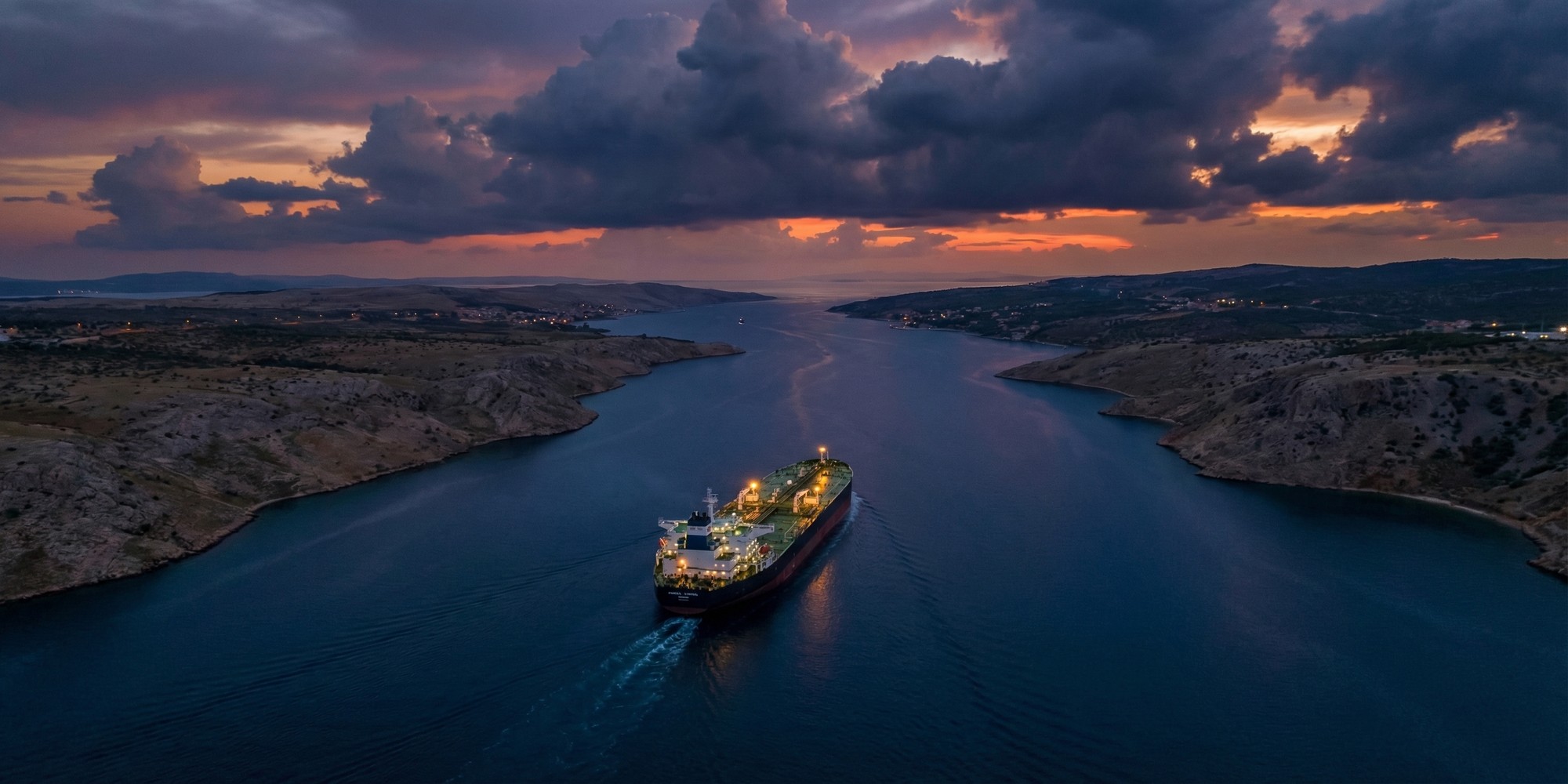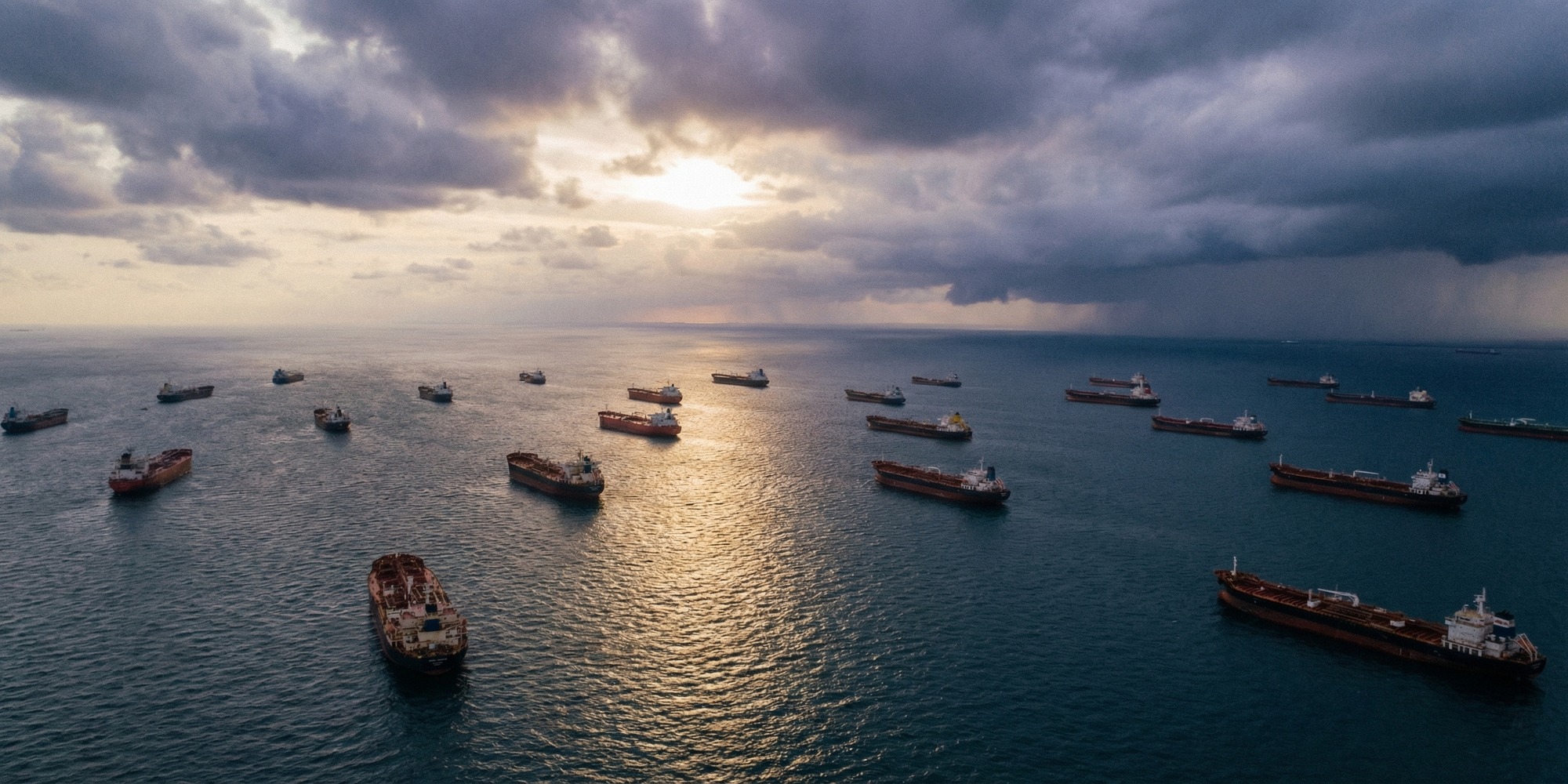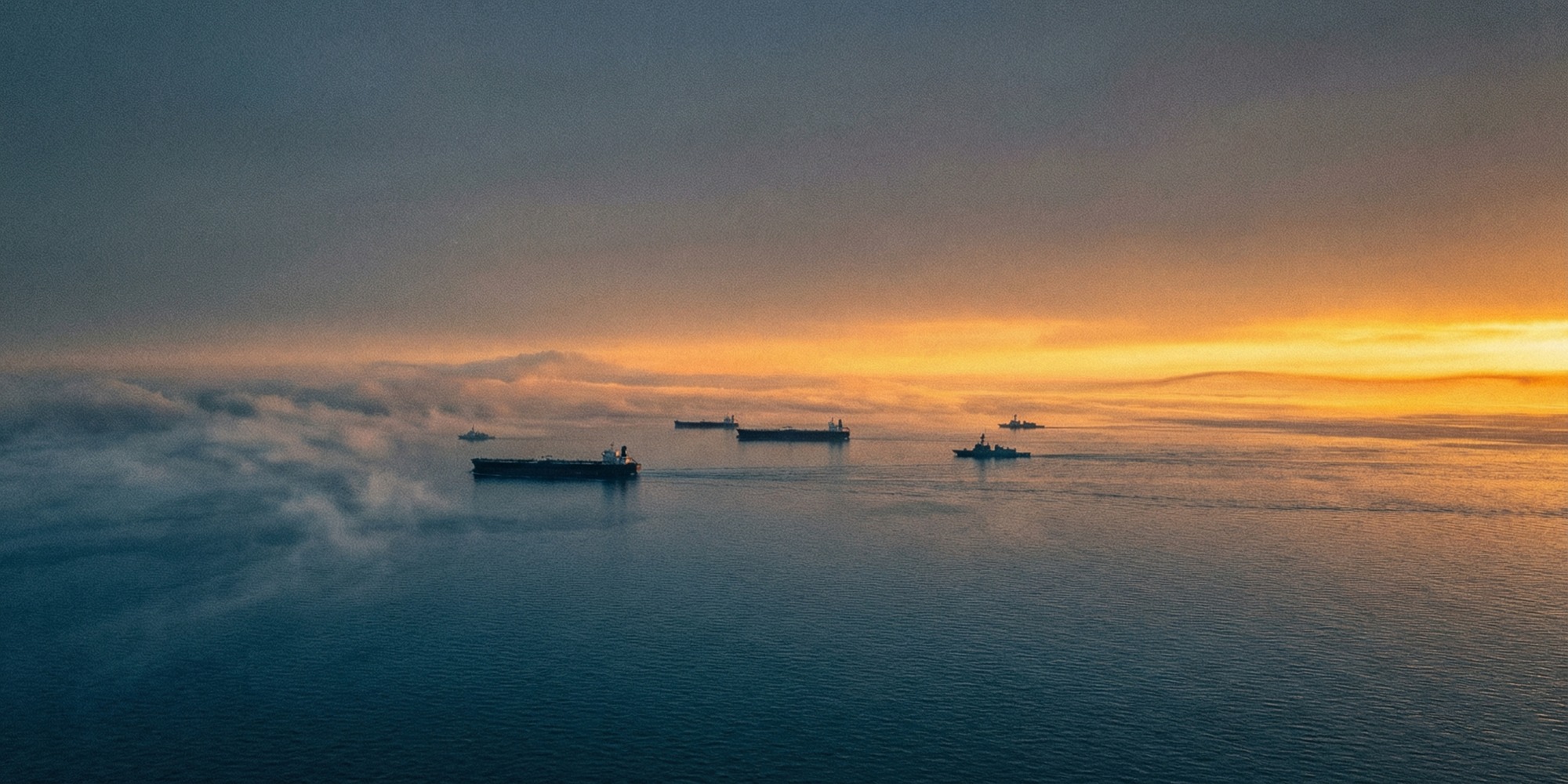
On Saturday, March 21, President Trump posted a numbered list of military objectives on Truth Social and gave Iran a 48-hour ultimatum: open the Strait of Hormuz or face strikes on Iranian power plants. By Monday morning UTC, that deadline had elapsed with no Iranian compliance and no US strike — but in the intervening hours, Tehran had dramatically raised the stakes. Iran's Defence Council issued a formal statement threatening to mine not just the Strait, but the entire Persian Gulf if the United States moved against Iranian coastal infrastructure. The conflict had entered a new and more dangerous register.
The mine threat reframes what was already a fragile standoff. Rather than a contained chokepoint crisis, the potential closure of the whole Gulf — Qatar's LNG terminals, the UAE's ports, Saudi Arabia's eastern oilfields, and the US Navy's 5th Fleet headquarters in Bahrain — transforms a regional confrontation into a challenge to the global energy architecture. Brent crude hit $113.40 on Monday, and the International Energy Agency's chief warned of "the world's worst energy crisis in decades" if the Strait cannot be reopened.
Key Takeaways
- Iran's Defence Council has threatened to mine the entire Persian Gulf — not just Hormuz — if the US attacks Iranian coasts or islands, citing deployable drifting mines
- Trump's 48-hour Hormuz ultimatum, issued Saturday March 21, expired Monday without US strikes or Iranian compliance
- UK PM Starmer and Trump held a 20-minute "constructive" call on Sunday; the UK has shifted its base-use policy to permit US offensive strikes from British soil
- Brent crude reached $113.40 on March 23; the IEA chief warned of the worst energy crisis in decades if the Strait stays closed
Iran's Counter-Escalation: Mining the Gulf
The Defence Council statement, reported by BBC Persian and Iranian state media on the morning of March 23, was explicit in its scope and mechanism. Tehran declared that "any attempt by the enemy to attack Iranian coasts or islands" would trigger the deployment of "various types of naval mines, including drifting mines deployable from the shore" across all Gulf access routes.
"Any attempt by the enemy to attack Iranian coasts or islands will lead to all access routes in the Gulf and coastal areas getting mined with various types of naval mines, including drifting mines deployable from the shore."
— Iran Defence Council statement, March 23, 2026 (reported via BBC Persian / Iranian state media)
The Council went further, warning that strikes on Kharg Island — Iran's primary oil export terminal, handling roughly 90 percent of the country's crude exports — would prompt Iran to cause "insecurity" in the Red Sea and "set fire" to energy facilities throughout the Gulf region. The statement placed responsibility for any resulting catastrophe explicitly on "the aggressor."
The legal dimension of the threat is significant. Drifting mines in international waterways are prohibited under Hague Convention VIII (1907), which bans their use due to their indiscriminate character. Iran's explicit reference to shore-deployable drifting mines signals a potential willingness to violate international humanitarian law as an asymmetric deterrent — a pattern with historical precedent. During the 1987–88 Tanker War, Iran mined the Persian Gulf at scale, ultimately prompting Operation Earnest Will, in which the United States re-flagged Kuwaiti tankers under American colours and provided naval escorts.
The exposure of Gulf states to a mining campaign extends well beyond the Strait of Hormuz. Roughly 20 percent of globally traded oil transits Hormuz; Qatar accounts for approximately 8 percent of global LNG exports from its Gulf terminals; and combined, the Gulf region handles an estimated 25–30 percent of globally traded liquid hydrocarbons. Some 84 percent of Hormuz crude flows to Asia, leaving China, Japan, and South Korea acutely vulnerable — a factor with implications for how Beijing reads its strategic interest in de-escalation. As US markets have already priced in, the consumer-side energy shock is not limited to import-dependent nations: global price exposure is universal.
The Diplomatic Architecture: UK-US Coordination
Even as the ultimatum expired, a parallel diplomatic effort was taking shape — one largely invisible in Trump's public posture. On Sunday evening, March 22, UK Prime Minister Keir Starmer and President Trump spoke for approximately 20 minutes in what Downing Street described as a "constructive" call. The two leaders "agreed that reopening the Strait of Hormuz was essential to ensure stability in the global energy market" and "agreed to speak again soon," according to the Downing Street readout, as reported by the BBC.
The call carried particular weight given the UK's revised base-use policy. Announced on Friday, March 20, London agreed to permit the United States to use British military installations for offensive operations targeting sites around the Strait — a significant shift from an earlier "defensive operations only" posture that had drawn criticism from Washington. The shift was accompanied by a disclosure by Housing Secretary Steve Reed that two Iranian ballistic missiles had been fired at the joint US-UK base at Diego Garcia in the Indian Ocean; one fell short, one was intercepted.
On Monday, March 23, Starmer chaired an emergency COBRA meeting attended by the Chancellor of the Exchequer, the Foreign Secretary, the Energy Secretary, and Bank of England Governor Andrew Bailey. The agenda addressed energy security, inflation exposure, and supply chain disruption — a signal that London is managing the crisis on both its foreign policy and domestic economic dimensions simultaneously. Housing Minister Matthew Pennycook acknowledged the government was "very alive to the risks" of the conflict putting "upward pressure on inflation," and a £53 million relief package was announced for households facing surging heating oil costs.
The deeper analytical question is what the Starmer-Trump coordination can actually achieve. Trump's stated war objectives, as enumerated on Friday, included degrading Iran's military and nuclear programme, and protecting regional allies — but notably omitted any explicit goal of reopening the Strait, which Trump described as "the responsibility of other nations." The US, he argued, was a net energy exporter and had no direct dependence on Gulf oil — a framing analysts dispute given global price integration. No demand for regime change was included, representing a rhetorical moderation from the earlier "unconditional surrender" language. The gap between the ultimatum's structure and its stated aims creates ambiguity that neither side appears capable of resolving through dialogue alone. Broader economic dimensions, including the stagflation risk building in global oil markets, add further pressure on mediators to find a workable off-ramp.
No Mechanism, No Ceasefire
The fundamental problem facing those seeking a diplomatic resolution is structural. The Geneva back-channel, which had been the principal unofficial negotiating track, collapsed on March 18. The Oman channel has gone quiet. Qatar and Saudi Arabia's mediation efforts have stalled. There are no formal ceasefire talks underway, and the 48-hour ultimatum format — by design or by accident — creates a deadline spiral that narrows rather than expands the space for compromise.
For Tehran, refusing to comply with the ultimatum is itself a demonstration of resolve: capitulation under threat would carry severe domestic political costs and invite future coercive demands. For Washington, the failure to act on an expired ultimatum carries its own credibility risk. Trump's own framing of the operation as a "simple military manoeuvre" sits in tension with the Pentagon's ongoing deployment of a Marine expeditionary unit and a reported $200 billion emergency defence funding request currently before Congress.
What the Starmer-Trump call, the COBRA meeting, and the various bilateral contacts represent is crisis management rather than conflict resolution — the construction of guardrails around an escalation that neither party appears to have a clear pathway out of. The Defence Council's mine threat has, if nothing else, ensured that the cost calculus for any US strike on Iranian coastal infrastructure is now visible to every party with a stake in open Gulf navigation. Whether that visibility functions as deterrence, or merely as a measure of how high the stakes have become, may depend on events in the next 48 hours.
A mine threat issued after the last back-channel collapsed is the same last-resort leverage recorded on the Armed Conflicts Map's Strait of Hormuz crisis page.