Denmark held a snap general election on March 25, 2026, and produced the result that Prime Minister Mette Frederiksen least wanted: a hung parliament at one of the most diplomatically precarious moments in the country's modern history. Frederiksen had called the early vote confident that her firm public stance against Washington's demands over Greenland had given her Social Democrats the political wind to secure a third term. The verdict from the Folketing's 179 seats told a different story.
The Social Democrats won 21.9 percent of the vote — their weakest showing since 1903, according to BBC News. Her "red bloc" of left-leaning parties secured only 84 seats, well short of the 90-seat majority threshold. The right-wing "blue bloc" came in at 77 seats. Neither side commands a governing majority, and the pivot point between them is a man who already has a Washington contact list that most European foreign ministers would envy.
Key Takeaways
- Denmark's Social Democrats recorded their worst result since 1903 at 21.9%, with Frederiksen's red bloc falling 6 seats short of a governing majority in the 179-seat Folketing.
- Lars Løkke Rasmussen's centrist Moderates hold 14 seats and kingmaker status, giving his party outsized influence over the next government's Greenland posture.
- Frederiksen called the election to capitalize on poll gains tied to her rejection of Trump's Greenland annexation demands — but domestic issues including cost of living and pesticide contamination dominated voters' minds.
- Coalition negotiations may take weeks, leaving Denmark under a caretaker government with no firm mandate as the US-Greenland standoff and NATO tensions remain unresolved.
The Election Nobody Expected to End This Way
Frederiksen's calculus going into the campaign was straightforward: her approval ratings had risen sharply on the back of her unyielding refusals to entertain any transfer of Greenlandic sovereignty to the United States. President Trump has repeatedly asserted — including through formal diplomatic channels — that Greenland must become American, citing Arctic security imperatives and competition with China for rare earth resources. Frederiksen's public pushback resonated. Polls showed the Social Democrats leading comfortably.
But Danish voters, when they actually entered the booths, were thinking about their grocery bills, their pension contributions, and a pesticide contamination crisis affecting drinking water across agricultural regions. The geopolitical drama that had dominated international headlines barely registered as a top-tier domestic concern. Campaign polling consistently showed the economy and welfare as the dominant issues — Greenland was a backdrop, not a ballot box driver.
"I have been responsible for this wonderful country for almost seven years. I am still ready to take on responsibility as Denmark's prime minister."
— Prime Minister Mette Frederiksen, Social Democrats, election night, March 25, 2026
The right bloc's leader, Troels Lund Poulsen of the Liberals, flatly ruled out any return to the broad cross-aisle arrangements that have occasionally characterised Danish coalition politics. His bloc's 77 seats cannot form a majority either. The configuration of the Folketing now places extraordinary weight on Lars Løkke Rasmussen, whose Moderates hold 14 seats — and who went out of his way on election night to signal that he had not yet chosen sides.
"We're standing in the middle. We're ready."
— Lars Løkke Rasmussen, leader of the Moderates, election night, March 25, 2026
The Greenland Overhang
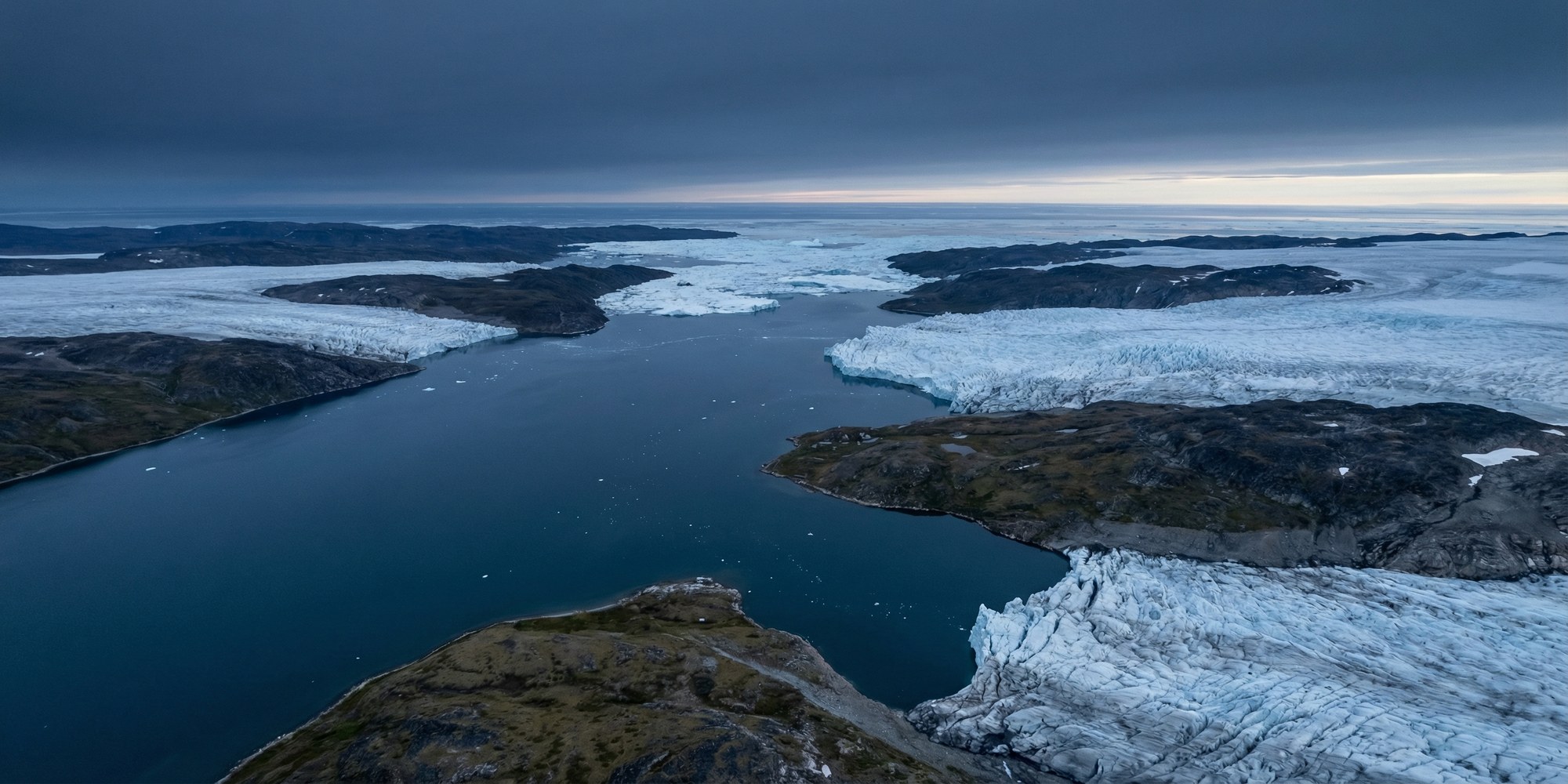
Greenland's constitutional status makes the diplomatic stakes unusually concrete. The island of approximately 56,000 inhabitants is a self-governing territory within the Danish Realm — controlling its domestic affairs since the home rule Act of 1979, with expanded autonomy formalized under the Act on Greenland Self-Government of 2009. Foreign policy and defence remain Denmark's prerogative. That arrangement is the fulcrum of the current dispute: Greenland's residents are Danish citizens, but Washington's interest is not in the people — it is in the Arctic shipping lanes, the rare earth mineral deposits, and the continued operation of Pituffik Space Base (formerly Thule Air Force Base), which the US has used since 1951.
Rasmussen's approach to the standoff has differed meaningfully from Frederiksen's. Where the outgoing prime minister favoured clear-cut sovereignty assertions, Rasmussen — a former prime minister who served between 2009 and 2011, and again from 2015 to 2019 — has positioned himself as a pragmatic transatlantic dealmaker. His visit to Washington earlier this year, which ended with a now-famous fist-bump with Vice President JD Vance and Secretary of State Marco Rubio, temporarily de-escalated the rhetorical pressure from the White House. His preferred framework involves structured investment dialogue and Arctic cooperation agreements rather than outright confrontation.
Whether that approach survives a coalition deal — and whether it would represent a softening or simply a repackaging of Denmark's position — is now the central question of European Arctic diplomacy. Denmark's predicament is not unique: as reporting from US Foreign Policy has detailed, several NATO members have already refused American requests to contribute warships to the Hormuz coalition, underscoring the broader pattern of allied governments navigating Washington's demands while managing fragmented domestic mandates.
Analysis: Diplomatic Fragility at the Worst Possible Moment
Denmark now faces a caretaker period whose duration is genuinely uncertain. Coalition negotiations in the Folketing can take days; they can take weeks. During that interval, Copenhagen's negotiating position on Greenland is effectively frozen — the outgoing government cannot credibly commit to new frameworks, and the incoming one does not yet exist. Trump's White House has shown little patience for the procedural rhythms of parliamentary democracy.
The economic context sharpens the urgency. The Iran war's disruption to global energy markets has pushed Brent crude above $115 per barrel, with analysts warning of a stagflationary shock that could persist through the summer. For Denmark, a small open economy heavily integrated into European supply chains, that price environment feeds directly into the domestic cost-of-living pressures that drove the very election result now complicating its foreign policy. Meanwhile, US markets have been whipsawed by the same energy shock — a context that shapes how Washington calculates the strategic value of Arctic resource control.
European allies are watching closely. If Denmark — a NATO founding member with a strong tradition of liberal democratic governance — cannot translate a firm public posture into a durable political mandate, the lesson for other capitals is uncomfortable: democratic accountability and strategic coherence may be pulling in opposite directions. Several other European governments face similar tensions, with Iran war fatigue, energy costs, and migration all creating conditions for electoral fragmentation.
Conclusion: A Mandate Deferred
Frederiksen's gamble failed not because her position on Greenland was wrong, but because Danish voters held two distinct referendums simultaneously: one on foreign policy, one on kitchen-table economics. On the latter, they returned a verdict of dissatisfaction — spread across parties rather than concentrated in any single alternative. The resulting arithmetic is Denmark's problem to solve, but the diplomatic consequences extend well beyond Copenhagen. Whoever ultimately forms the next Danish government will inherit the Greenland file without the strong mandate they would need to negotiate from strength — and with Trump still occupying the White House, the interval before a clear counterpart emerges in Copenhagen may itself become a factor in how Washington chooses to press its case.