When the United States and Israel launched Operation Epic Fury on February 28, Gulf Arab governments were conspicuously silent. None had requested the strike campaign; several had privately urged restraint. Seventeen days later, the calculus in Gulf capitals has inverted. With Iranian missiles having struck airports, ports, oil facilities, and commercial hubs across all six Gulf Cooperation Council member states, regional leaders are now pressing Washington not to stop short of permanently dismantling Iran's ability to threaten the Gulf's energy lifeline, according to three Gulf sources who spoke to Reuters.
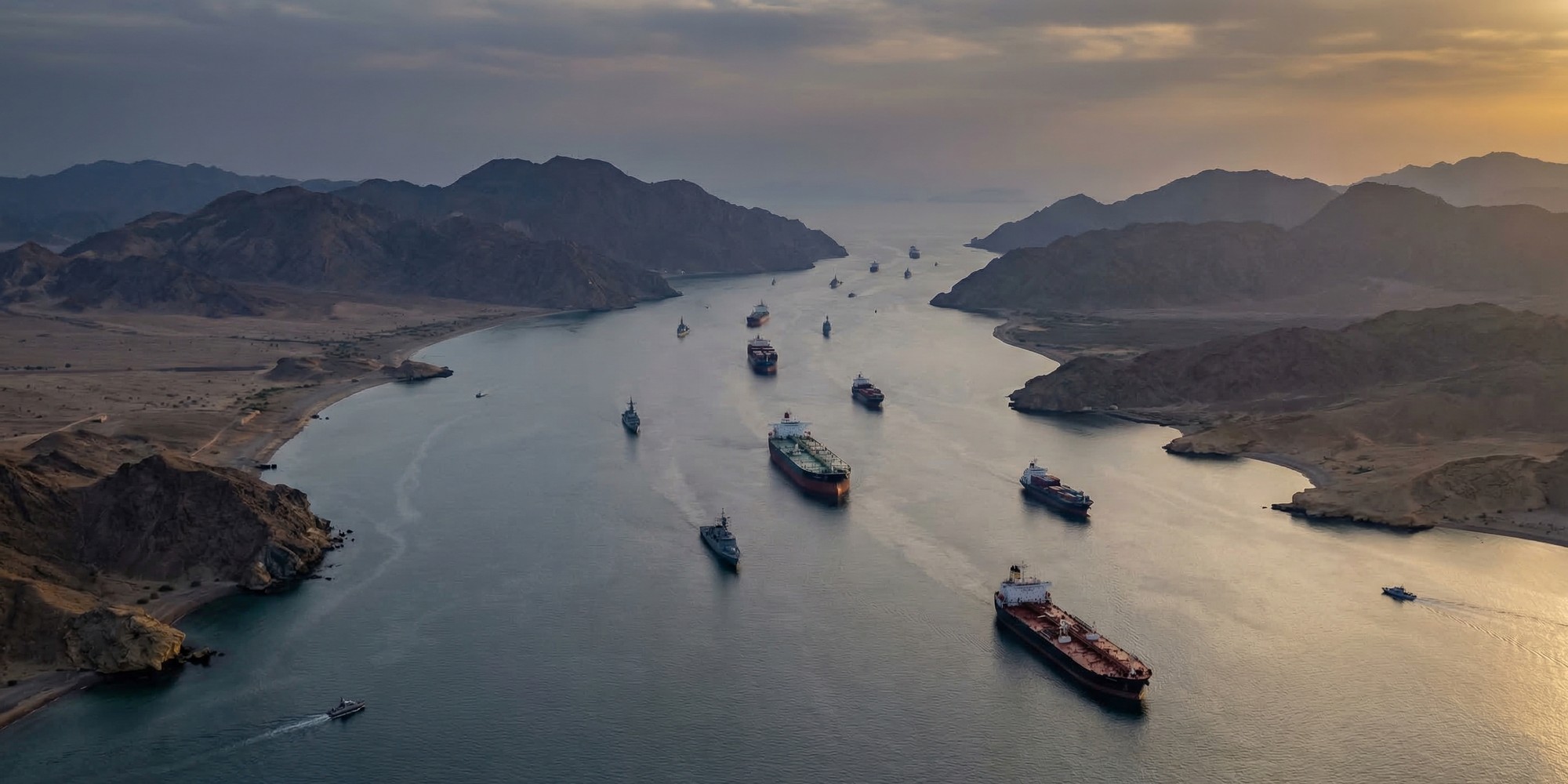
The shift reflects a strategic reassessment as rapid and profound as any in the region's modern history. Iran's decision to close the Strait of Hormuz — through which approximately one-fifth of global oil shipments pass — and to conduct sustained strikes against GCC civilian and economic infrastructure has transformed a conflict these states initially viewed as someone else's problem into an existential threat to their own sovereignty and economic model. The war that Gulf leaders did not ask for has become the war they now want concluded on the most decisive terms possible.
Key Takeaways
- All six GCC states have suffered Iranian missile and drone strikes on airports, ports, and oil infrastructure since the war began on February 28.
- Gulf leaders are urging Washington to comprehensively degrade Iran's military capacity rather than seek a limited ceasefire that leaves Iran able to threaten the strait again.
- Iran has selectively reopened the Strait to tankers from Pakistan, India, and Türkiye, with Chinese and other neutral-flag vessels also gaining passage — but US and Western-allied ships remain blocked.
- Iran has not attacked any vessel in the Strait since March 12, and US Navy aircraft have established local air dominance over segments of the Iranian coast, according to the Institute for the Study of War.
- Brent crude reached $105.70 per barrel on March 16 — more than 40 percent above its pre-war level of approximately $65.
From Reluctant Bystanders to Belligerent Neighbors
The transformation in Gulf attitudes tracks directly with the scope of Iran's counter-campaign. In the war's first week, Iran's strikes focused primarily on US and Israeli assets. That targeting calculus shifted decisively in week two, as the Islamic Revolutionary Guards Corps directed missiles and drone swarms at the UAE's port facilities, Saudi oil infrastructure, Bahraini military installations, and commercial aviation hubs across the peninsula. The 2019 Abqaiq-Khurais strikes — which Iran denied — had alarmed Gulf leaders; strikes on six GCC capitals and economic centers have enraged them.
"At first we defended them and opposed the war. But once they began directing strikes at us, they became an enemy. There is no other way to classify them."
— Abdulaziz Sager, Chairman, Gulf Research Center, March 16, 2026 (via Reuters)
Sager, who is described as familiar with Saudi government thinking, articulated a view that has hardened across GCC capitals: that leaving Iran with significant offensive missile and drone manufacturing capacity after any ceasefire would simply reset the clock to the next crisis. A Gulf source told Reuters that unless Iran was "severely weakened," it would continue to hold the region to ransom whenever strategic tensions rose. For Gulf leaders, the source said, inaction had become the greater long-term risk.
Simultaneously, Washington has been pressing Gulf states to formally join the coalition — a request that places GCC governments in a delicate position. Three of the five Western and Arab diplomats briefed by Reuters confirmed that President Trump wants visible regional backing to bolster the campaign's international legitimacy. Gulf states have been reluctant to take that final step publicly, wary of cementing a formal military alliance that could invite further Iranian retaliation and complicate relations with Iran's patron networks.
Iran's Selective Hormuz Calculus
Even as the diplomatic and military pressure intensifies, Iran has begun introducing a tiered access system for the Strait of Hormuz that reveals a degree of strategic calculation behind the blockade. The IRGC announced on March 5 that the strait would remain closed only to ships from the United States, Israel, and their Western allies — a formulation that exempts a broad swath of the global shipping fleet.
In practice, selective passage has been quietly extended to Pakistan, India, and Türkiye. Iran's ambassador to India confirmed that Tehran had allowed Indian-flagged tankers to transit the strait, and the Indian Ministry of Ports confirmed that two LPG tankers had passed safely on March 15. A Pakistani-flagged Aframax tanker, the Karachi, became the first non-Iranian vessel with an active AIS transponder to transit the strait on March 16, according to Al Jazeera. Vessels transporting crude to China and India have also been allowed passage, the New York Times reported, citing US officials.
The pattern is diplomatically legible: Iran is signaling to non-Western powers that the blockade is a weapon calibrated against its adversaries, not a general closure of a global commons. The move has prompted some vessels to falsify transponder identifications, broadcasting Chinese or neutral registrations to attempt transit — a dynamic that Chatham House analysts have described as extending the conflict's volatility into the broader Indian Ocean region.
The Institute for the Study of War (ISW) noted in its March 16 special report that Iran has not attacked any vessels in the Strait since March 12. The ISW also cited footage from anti-regime media showing a US Navy F/A-18 Hornet engaging targets at extremely low altitude in Chabahar on the Iranian coast — suggesting that US forces have achieved at least local air dominance over certain coastal segments, which would enable aerial protection of shipping lanes if ordered to do so.
Leadership Dynamics and the Post-War Horizon
Any assessment of Iran's trajectory must account for the transformation at the top of the regime. The elevation of Mojtaba Khamenei as Supreme Leader following the death of his father Ali Khamenei has concentrated authority in a circle dominated by long-standing hardline IRGC commanders. ISW's analysis identifies former IRGC Intelligence Organization head Hossein Taeb, de facto IRGC Commander Brigadier General Ahmad Vahidi, former IRGC Commander General Mohammad Ali Jafari, and Parliament Speaker Mohammad Bagher Ghalibaf as the central figures who campaigned for Mojtaba's selection by the Assembly of Experts. Their collective biography suggests an ideological disposition toward confrontation rather than accommodation — a dynamic that complicates ceasefire diplomacy and that US negotiators tracking the diplomatic endgame have acknowledged presents a fundamentally different interlocutor than the reformist-inflected Iranian leadership of previous decades.
The economic stakes of the standoff are severe and deepening. Brent crude at $105.70 reflects a 40 percent premium over pre-war levels, and the disruption to Gulf trade and transit revenues compounds the direct damage from Iranian strikes. As analysts at US Market Updates have tracked, the oil shock has intersected with existing tariff pressures to produce a genuine inflationary squeeze in the United States, limiting the White House's political tolerance for an extended campaign. That pressure — to deliver a decisive outcome before domestic economic pain escalates — may ultimately align Washington's interests with the Gulf states' demands more closely than at any point since the war began.
A New Regional Architecture in the Balance
The conflict is not simply a bilateral US-Iran confrontation; it is reshaping the entire architecture of Gulf security. The GCC states' shift from cautious neutrality to active pressure for Iran's military degradation represents a strategic reorientation that will outlast the current campaign. The Gulf states have signaled that the pre-February 28 accommodation with Iranian power is no longer sustainable, regardless of how the war itself ends. The question now is whether Washington's military and diplomatic reach can match the ambition that its Gulf partners are demanding, and whether the selective reopening of the Strait represents the beginning of an off-ramp or merely a tactical pause before the next phase of a conflict that has already remade the region.
The GCC's shift from silence to a demand that Iran be disarmed is inseparable from the third week of the strait crisis recorded on the Armed Conflicts Map's Strait of Hormuz crisis page.