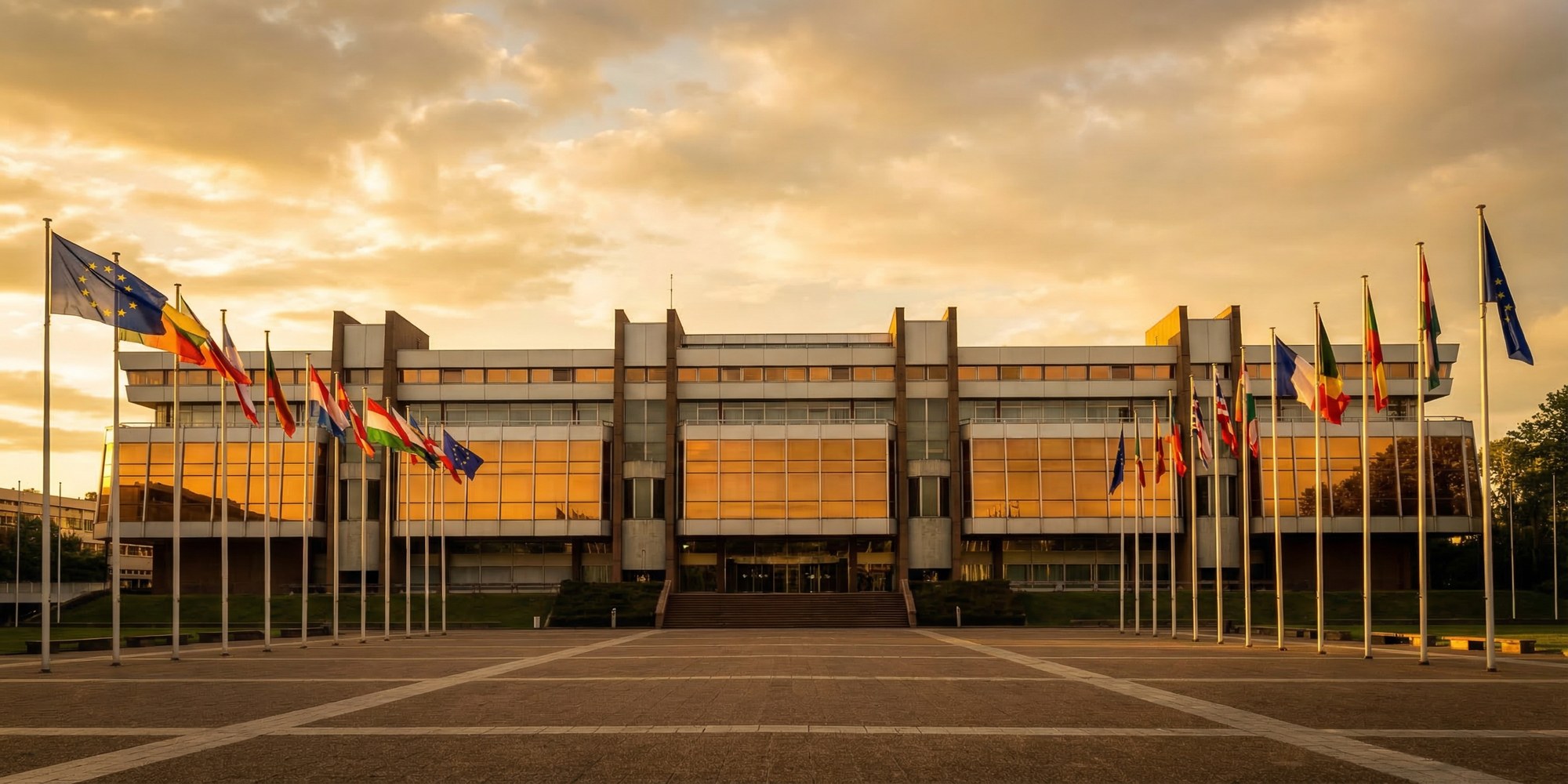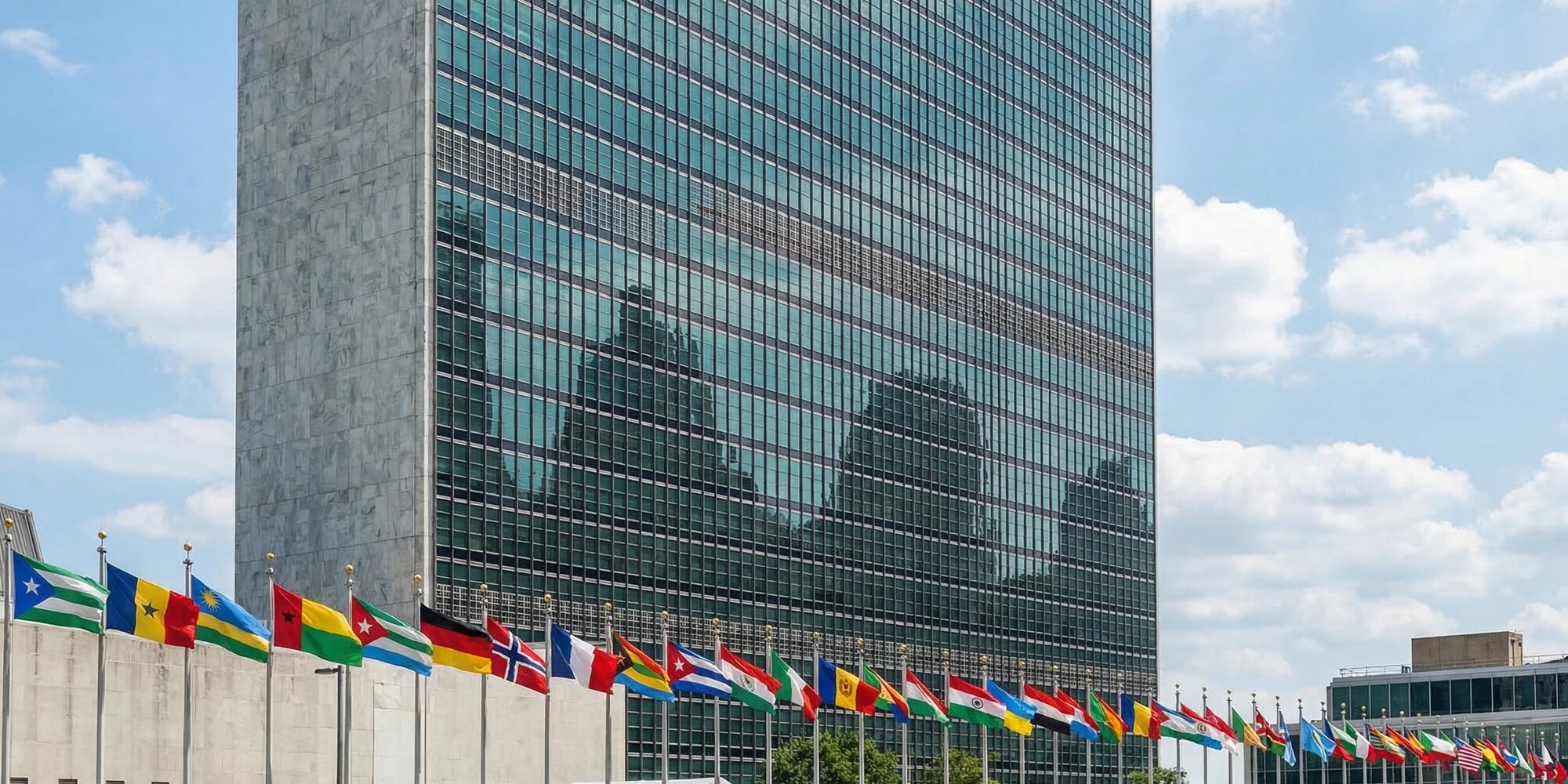
On March 11, 2026, the UN Security Council adopted Resolution 2817 by a vote of 13 in favour, zero against, and two abstentions — condemning Iran's ongoing missile and drone attacks against Bahrain, Kuwait, Oman, Qatar, Saudi Arabia, the United Arab Emirates, and Jordan. What distinguished the vote from the routine machinery of Security Council diplomacy was not the outcome but the scale of global backing: 136 UN member states co-sponsored the draft, making it the most broadly supported Security Council resolution in the body's eight-decade history.
China and Russia, both permanent members holding veto power, chose abstention rather than blocking the resolution — a calibrated restraint that signaled disapproval of Iran's actions while avoiding a full endorsement of the Western and Gulf-led diplomatic offensive. For students of multilateral institutions, the vote's architecture is as significant as its text: it reveals how the Security Council can still function as a legitimacy-generating mechanism even when great-power solidarity has fractured.
Key Takeaways
- Resolution 2817 was adopted 13–0–2, with China and Russia abstaining rather than vetoing — a deliberate and diplomatically significant choice.
- A record 136 UN member states co-sponsored the draft resolution, the highest co-sponsorship in Security Council history.
- The resolution demands Iran immediately cease attacks on seven Gulf and Middle Eastern states and halt interference with Strait of Hormuz navigation.
- A competing Russian counter-resolution calling for a general ceasefire received only four votes — well below the nine required for adoption.
What Resolution 2817 Says — and What It Deliberately Omits
The resolution's operative clauses, published by the UN documentation system as S/RES/2817(2026), condemn "in the strongest terms" Iran's attacks against the seven states, determine those attacks constitute a breach of international law and a serious threat to international peace and security, and demand an immediate cessation of hostilities against civilian objects and residential areas. Critically, it demands Iran halt any interference with maritime trade through the Strait of Hormuz and the Bab al-Mandeb — waterways through which roughly 20 percent of global oil trade transits. Iran's declaration on March 4 that the Strait was "closed" to commercial shipping had sent Wall Street into a third straight week of losses and pushed Brent crude above $100 for the first time since 2022.
What the resolution conspicuously does not address is equally telling. There is no mention of the US-Israeli joint strikes that began on February 28, targeting Iran's nuclear infrastructure, ballistic missile facilities, naval assets, and political and military leadership — including the killing of Supreme Leader Ali Khamenei. That omission was the price of passage: had the draft condemned or even referenced the strikes, it would almost certainly have triggered a US veto. Russia's ambassador Vassily Nebenzia identified the silence as a fundamental flaw, telling the Council:
"Reading Bahrain's resolution without context would lead one to believe that Tehran, with no provocation and out of pure malice, decided to strike targets across the region for no reason."
— Vassily Nebenzia, Russia's Permanent Representative to the UN, March 11, 2026
Russia's own counter-resolution, which called for all sides to cease military activity and explicitly condemned civilian casualties on all sides, received only four votes in favour — from China, Russia, Pakistan, and Somalia — falling well short of the nine required for adoption and receiving two votes against (the United States and Latvia), with nine abstentions.
The Diplomatic Architecture: How 136 Co-Sponsors Were Assembled
The resolution was drafted and sponsored by Bahrain, acting on behalf of the Gulf Cooperation Council member states plus Jordan — all nations that had absorbed Iranian attacks since early March. According to Security Council Report's What's In Blue analysis, the GCC bloc worked intensively over the preceding week to secure co-sponsorships across Africa, Asia, Latin America, and Europe, framing the resolution explicitly as a sovereignty and international law issue rather than a Western-versus-Iran contest.
The strategy worked. By spreading the resolution's appeal beyond the traditional Western alliance and anchoring it in the language of state sovereignty and freedom of navigation — principles with near-universal support in the Global South — the GCC delegations assembled a co-sponsorship list that rendered the resolution's legitimacy almost impervious to attack on procedural grounds. Bahrain's UN Ambassador Jamal Alrowaiei framed the stakes in deliberately inclusive terms following the vote:
"This region is a lifeline for the global economy and a vital corridor for international trade and energy security. Ensuring the security of this region is not merely a regional concern — it is a shared international responsibility that is closely linked to the stability of the global economy."
— Jamal Alrowaiei, Bahrain's Representative, UN Security Council, March 11, 2026
The calculus for China and Russia in choosing abstention rather than veto was distinct but convergent. For Beijing, vetoing a resolution sponsored by Gulf states — with whom China maintains extensive energy and trade dependencies — would have carried real diplomatic costs. For Moscow, the abstention preserved its self-image as a defender of multipolar order and Iranian sovereignty without incurring the reputational damage of obstructing a resolution backed by two-thirds of the UN membership. France's representative captured the mood of the majority: "This war, which poses grave risks to regional security, must end now. Only respect for international law and diplomacy can ensure the lasting security and stability of the region."
Iran's Rejection and the Enforcement Gap
Iran's response to the resolution was swift and unambiguous. Ambassador Amir-Saeid Iravani, addressing the Council immediately after the vote, called the adoption "a deeply regrettable day for the Security Council and for the international community," stating that it represented "a serious setback to the Council's credibility" and would "leave a lasting stain on its record." Tehran subsequently announced it would not comply with the resolution's demands.
That rejection points to what analysts at the Council on Foreign Relations and elsewhere describe as the resolution's central structural limitation: it is binding in principle under Chapter VII norms — its language makes clear that the Council has "determined" a threat to international peace and security — but provides no enforcement mechanism. There are no sanctions triggers, no authorized use-of-force provisions, and no verification framework. The historical precedent is sobering: Security Council Resolutions 1737, 1747, 1803, and 1929, all imposing sanctions on Iran over its nuclear program between 2006 and 2010, were incrementally circumvented over years through the construction of an elaborate shadow fleet and sanctions evasion architecture.
The UAE's diplomatic adviser Dr. Anwar Gargash acknowledged both the resolution's significance and its limits: "The adoption of the resolution by the council reflects a clear international stance that rejects these attacks and increases Iran's isolation. Respect for state sovereignty and adherence to international law remain the foundation for security and stability in the region." The framing — emphasizing Iran's international isolation rather than the resolution's coercive capacity — was telling.
Implications for Multilateral Diplomacy
Resolution 2817 will not, by itself, alter the military situation in the Gulf. But its significance for the architecture of international institutions extends beyond the immediate crisis. The record co-sponsorship demonstrates that the Security Council retains its function as a legitimacy-granting forum even when the P5 is internally divided. The abstention-rather-than-veto behavior of China and Russia — a deliberate restraint under conditions of extreme geopolitical stress — suggests that both powers are calibrating their support for Iran against broader multilateral relationships in ways that may matter as diplomatic back-channels develop.
Meanwhile, the active diplomacy surrounding the resolution indicates that formal UN processes and informal great-power contacts are operating in parallel. French President Macron's March 15 phone call with Iranian President Pezeshkian — urging a halt to attacks and freedom of Hormuz navigation — suggests that European diplomatic off-ramps remain open even as the military campaign continues. U.S. diplomatic posture in the Gulf has simultaneously involved pressing NATO allies and China to contribute naval assets to Hormuz freedom-of-navigation operations, a parallel track that will interact in complex ways with the Council's normative mandate.
The resolution's silences — on the US-Israeli strikes, on humanitarian corridors, on any ceasefire framework — are not incidental. They reflect the limits of what multilateral consensus can accommodate in a fractured Council. Resolution 2817 documents the world's condemnation of Iran's actions with unprecedented breadth. Whether it shapes the diplomatic calculus that eventually produces a negotiated off-ramp, or whether it is remembered as a historic footnote to a war resolved by other means, remains the central unanswered question of the coming weeks.
Resolution 2817's record vote and its silences are the same Council limits on the Iran war recorded on the Armed Conflicts Map's Iran–US war page.