On the morning of March 13, 2026, as G7 heads of government were still processing the previous day's emergency conference call, German Chancellor Friedrich Merz stepped before cameras in Norway and delivered a rebuke with no modern precedent in the alliance's history. Six of the seven member states — Germany, France, the United Kingdom, Canada, Italy, and Japan — had made their position explicit: the United States was wrong. Washington proceeded regardless.
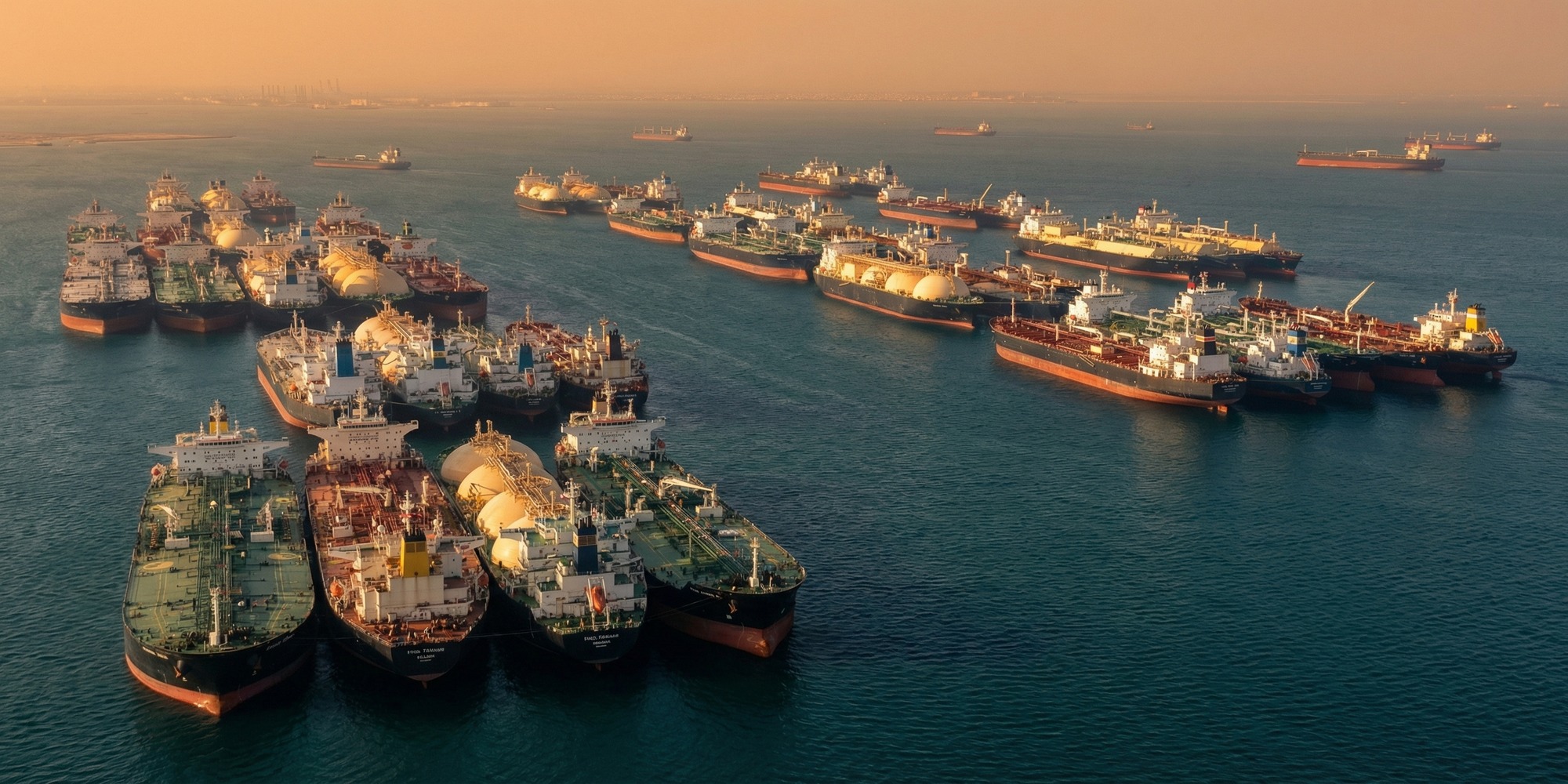
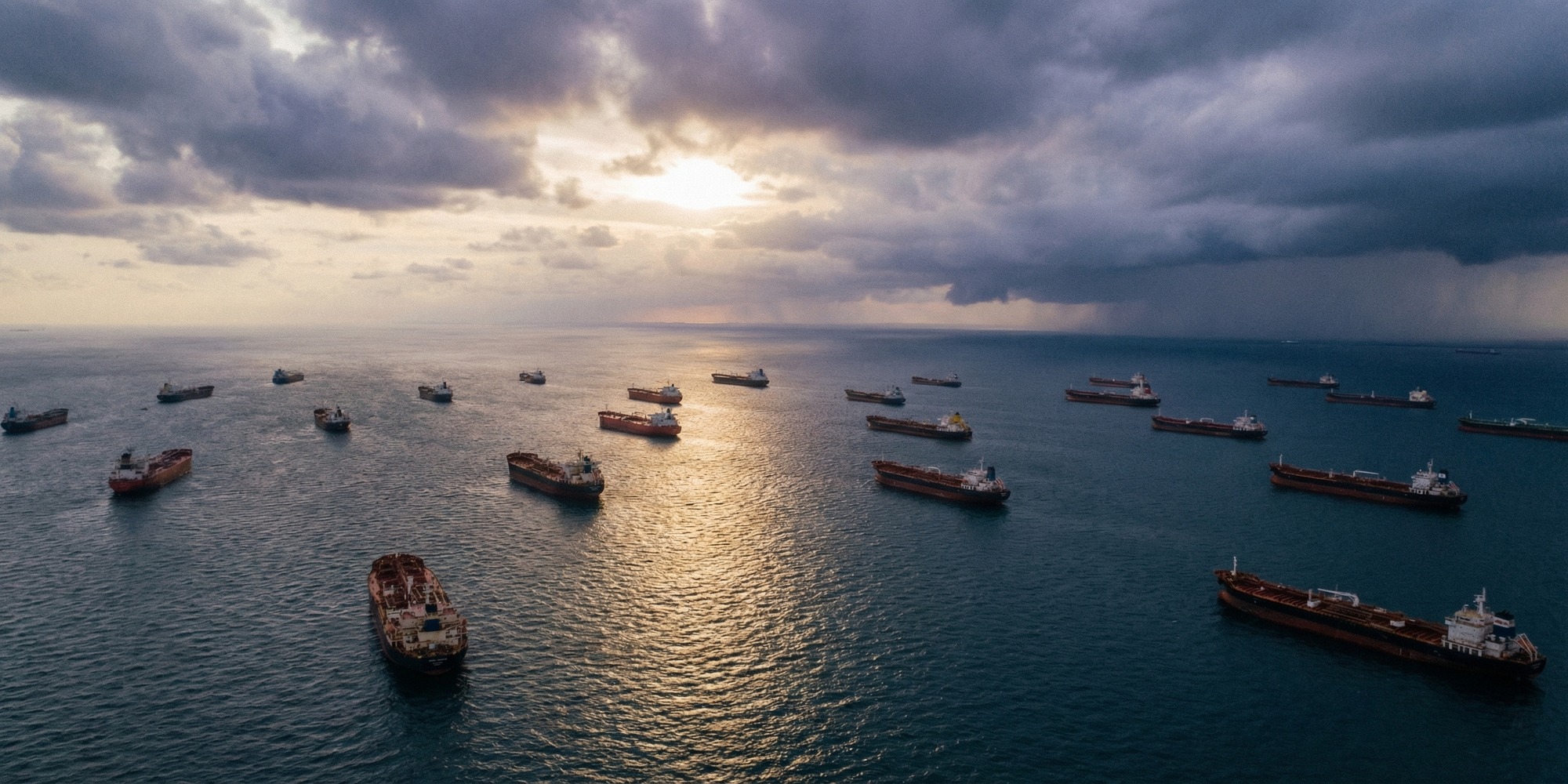
The cause of the rupture was a 30-day general license issued by the US Office of Foreign Assets Control (OFAC) on March 12, authorizing the purchase of Russian crude oil and petroleum products already loaded on vessels on or before that date, with disembarkation permitted through April 11. Treasury Secretary Scott Bessent framed the measure as an emergency response to an energy crisis triggered by the ongoing US-Israeli military campaign against Iran, which has effectively closed the Strait of Hormuz — through which roughly 20 percent of global oil and liquefied natural gas normally transits — and pushed Brent crude above $100 per barrel.
Key Takeaways
- The US Treasury OFAC issued a 30-day waiver on March 12 permitting purchases of Russian crude oil already at sea, valid through April 11.
- Six of seven G7 members — Germany, France, UK, Canada, Italy, Japan — opposed the measure; it is the most pronounced dissent in the alliance's modern history.
- Ukrainian President Zelensky estimated the waiver could provide Russia approximately $10 billion in additional war revenue.
- The waiver follows a similar carve-out granted to India in late February and affects an estimated 100 million barrels of floating crude inventory.
The Waiver: What the US Actually Did
The technical scope of the OFAC license is deliberately constrained. It covers oil already pumped and loaded at sea — not future Russian production — and expires after 30 days. Bessent argued the measure was "narrowly tailored" and "short-term," designed to release approximately 100 million barrels of stranded Russian crude inventory into global markets without generating new revenue streams for the Kremlin's military-industrial complex. The administration's logic tracks: in the acute phase of an energy shock, clearing floating supply can reduce price pressure without, in theory, incentivizing additional Russian extraction. The International Energy Agency had already pledged a record 400 million barrel release from strategic reserves — including 172 million from the United States — without measurably stabilizing prices. The oil simply was not getting to market fast enough.
The broader energy market context is critical. As Global Market Updates reported, the Iran war oil shock simultaneously triggered emergency deliberations at five major central banks in 72 hours, with the Federal Reserve and ECB choosing to hold rates while signaling that a prolonged Hormuz closure would force a reassessment. The domestic political pressure on Washington was real: energy prices above $100 per barrel in a US midterm election year represent a material political liability, and the administration has consistently framed the Iran campaign partly in terms of long-run energy security — a framing that becomes harder to sustain when pump prices are spiking in the short run.
The Rupture: Europe's Unambiguous Response
What made the G7 split historically significant was not merely that European leaders disagreed — transatlantic disagreements are routine — but that they said so publicly, in real time, having been overruled in a coordinated alliance forum.
"Six members of the G7 expressed a very clear view that this is not the right signal to send. We learned this morning that the US government has apparently decided otherwise."
— Friedrich Merz, German Chancellor, press conference, Norway, March 13, 2026
French President Emmanuel Macron was equally direct, stating that the closure of the Strait of Hormuz "in no way" justified lifting sanctions on Russia. European Council President António Costa called the US decision "very concerning, as it impacts European security." European Commission President Ursula von der Leyen echoed those concerns, while Canadian Prime Minister Mark Carney aligned Canada with the European position. Japan, completing the six-member bloc, also registered its opposition.
The UK position was notably more nuanced. Foreign Secretary Yvette Cooper, speaking from Saudi Arabia, described Russia and Iran as seeking to "hijack the global economy" — but characterized the US waiver as a "specific, targeted issue," stopping short of the direct condemnation voiced by Berlin and Paris. This careful calibration reflects London's persistent effort to avoid a complete break with Washington on any single issue, even as the transatlantic relationship strains under the weight of accumulated disagreements — including, as US Foreign Policy has documented, NATO allies' refusal to provide warships for Hormuz operations.
The Stakes: Zelensky's $10 Billion Warning and the Precedent Problem
Ukrainian President Volodymyr Zelensky traveled to Paris on March 13 to make the Ukrainian government's case directly. His argument was straightforward: regardless of the technical scope of the waiver, the financial benefit to Russia is real. Zelensky estimated the measure could provide Moscow with approximately $10 billion in additional war revenue — a figure that reflects the price differential between oil sold under sanctions restrictions through shadow-fleet intermediaries and oil sold at full market prices once sanctions are suspended. The fungibility argument is simple: money flowing to the Russian Treasury from oil sales, whatever the legal mechanism, frees up fiscal space for the Ukraine campaign.
Russia's reaction to the waiver was telling. Kremlin envoy Kirill Dmitriev declared on Telegram that the US action was "increasingly inevitable" and that Washington was "effectively acknowledging the obvious: without Russian oil, the global energy market cannot remain stable." The framing was deliberate — designed not just to welcome the financial relief but to use Washington's own decision as propaganda ammunition against the sustainability of European sanctions resolve.
The structural stakes extend beyond Ukraine. Sanctions regimes derive their deterrence value partly from the perception that they are permanent — that no crisis will be severe enough to justify relief. One energy-shock waiver does not dismantle the Ukraine sanctions architecture, which has been built in layers since February 2022, including the December 2022 G7 price cap set at $60 per barrel. But it establishes a template. Future crises — oil shocks, food supply disruptions, financial contagion events — become potential leverage points through which sanctioned states can seek relief, and through which domestic political pressures in Western capitals can be weaponized against alliance solidarity. As domestic US economic pressures mounted — driving interest from the Federal Reserve's March rate deliberations to consumer price anxiety — the tension between short-term stabilization and long-term deterrence architecture became the defining question of Western sanctions policy.
There is also the paradox of dual theaters. Trump himself acknowledged in a Fox Radio interview that Russia may have provided Iran with targeting intelligence used in attacks on US forces in the region — meaning Washington issued financial relief to a state simultaneously aiding the adversary it is fighting. The administration has not publicly addressed this contradiction; the energy-stability argument apparently outweighs it in current policy calculus.
What Comes Next: The April 11 Deadline
The waiver's 30-day window is itself a pressure point. If US-Israeli operations succeed in reopening the Strait of Hormuz before April 11, the administration will have a natural off-ramp — the emergency that justified the waiver will have passed, and the license will not need to be renewed. If the Strait remains effectively closed, the question of extension becomes unavoidable. A second waiver would be far more damaging to G7 cohesion than the first, because it would transform what Washington has described as a temporary emergency measure into what European capitals would rightly characterize as de facto sanctions suspension. The April 11 deadline, in this sense, functions less as a policy boundary than as a referendum on the success of the Iran military campaign itself.
The G7 fracture over a Russia oil waiver is a Hormuz supply shock by another name — the same strait-driven sanctions problem documented on the Armed Conflicts Map's Strait of Hormuz crisis page.