When Omani Foreign Minister Badr al-Busaidi posted to social media on March 3 — just four days after the nuclear talks he had personally brokered collapsed without a deal — his message was deliberate: "There are off-ramps available. Let's use them." It was a diplomatic appeal aimed as much at Washington and Tehran as at an international community watching the U.S.-Israeli military campaign against Iran enter its fourth day. Within hours, Iranian drones had struck the Duqm commercial port on Oman's central coast.
The juxtaposition was stark, and instructive. Oman and Qatar, the two Gulf states that have served as the primary intermediaries between the United States and Iran for more than a decade, now find themselves in the impossible position of advocating for peace while absorbing the collateral damage of a war they failed to prevent. As the conflict grinds into its second week with no formal ceasefire framework in sight, both nations are quietly working to reconstruct the diplomatic infrastructure that evaporated on February 28, 2026 — the day talks ended with what Muscat called "significant progress" but no agreement, and with the ceasefire from the 2025 Twelve-Day War simultaneously expiring.
Key Takeaways
- The second round of Oman-brokered U.S.-Iran nuclear talks ended February 28 with "significant progress" but no deal — the same day the June 2025 ceasefire expired and military operations began.
- Omani FM Badr al-Busaidi publicly called for an immediate ceasefire on March 3, even as Iranian drones struck Oman's Duqm commercial port the same day, injuring a worker and damaging fuel facilities.
- Iran has sent indirect signals via back-channels that it could be open to talks, but U.S. officials confirmed on March 4 that no active negotiations are currently underway.
- Qatar's Foreign Ministry called the Duqm strike "an attack on the very principle of mediation" — signalling concern that the traditional immunity of neutral mediators has eroded.
The Architecture That Collapsed
The second round of high-level U.S.-Iran talks began on February 6, 2026, resuming a diplomatic track that had been suspended since the June 2025 ceasefire ended the twelve-day Israeli-Iranian war. That earlier conflict had produced a fragile truce — mediated jointly by the United States and Qatar — in which both sides agreed to pause hostilities while nuclear negotiations resumed. By February 2026, the Omani channel had reconvened a substantive dialogue: Carnegie Endowment analysis of the February round identified the U.S. delegation as led by Special Envoy Steve Witkoff, CENTCOM commander Admiral Brad Cooper, and presidential adviser Jared Kushner, and the Iranian delegation as led by Foreign Minister Abbas Araghchi alongside Supreme National Security Council adviser Ali Larijani.
As late as February 26, Omani officials were describing the Geneva and Muscat sessions as advancing with "significant progress," according to The Guardian's live coverage of the final session, with a further round in Vienna reportedly scheduled for the following week. Then February 28 arrived, no agreement was announced, the ceasefire formally lapsed — and within days, U.S.-Israeli strikes on Iranian nuclear facilities and command infrastructure had transformed the diplomatic tableau into a war map.
"Oman reaffirms its call for an immediate ceasefire and a return to responsible regional diplomacy. There are off-ramps available. Let's use them."
— Omani Foreign Minister Badr al-Busaidi, March 3, 2026, via X (formerly Twitter)
The Mediators Under Fire
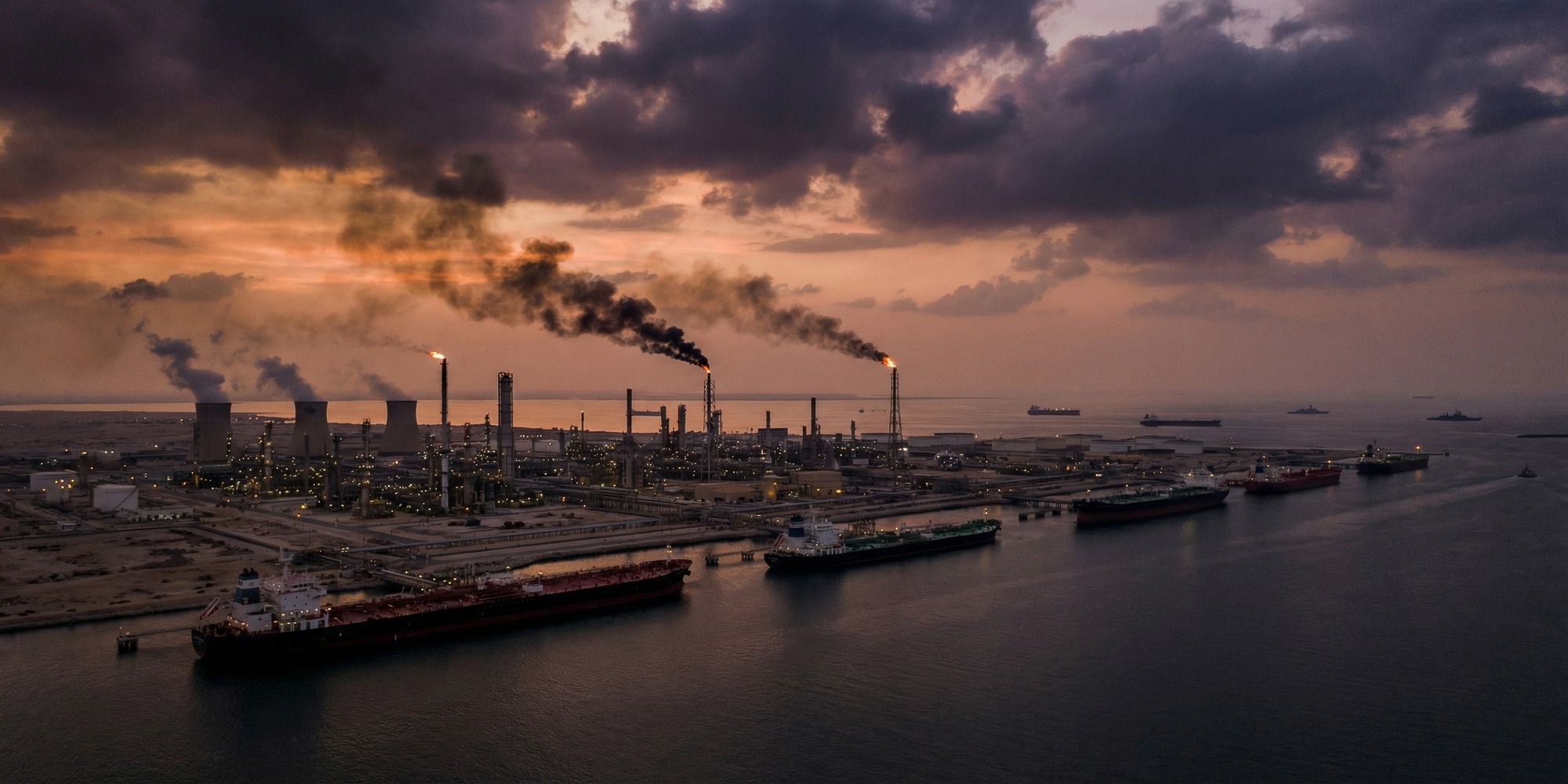
The outbreak of hostilities placed Oman and Qatar in an acutely difficult position. Both states had staked significant diplomatic credibility on the framework they helped construct — and both would pay a direct physical price for its failure. On March 1, Oman reported that two drones struck the Duqm commercial port in its Al Wusta Governorate, injuring an expatriate worker. A fuel tank at the same facility was hit in a second drone attack on March 3, Al Jazeera reported. Qatar, which had co-mediated the June 2025 ceasefire and subsequently shut down liquefied natural gas exports — representing roughly 20 percent of the global LNG supply — after Iranian drones targeted its facilities, found itself in a comparable bind.
The Carnegie Endowment for International Peace observed that the strikes represented a profound rupture in the regional logic that had previously insulated Gulf mediators from direct retaliation. Qatar's Foreign Ministry spokesperson Majed al-Ansari responded sharply to the Oman attack: the strikes were, he said, "an attack on the very principle of mediation." The statement carried weight beyond the diplomatic register — it signalled that Doha and Muscat could no longer take for granted the informal norm that neutral facilitators are shielded from battlefield consequences.
The State Department has been navigating this same tension. As US Foreign Policy's reporting on the State Department's Gulf alliance posture details, Washington has simultaneously relied on Qatar and Oman as diplomatic interlocutors while conducting military operations that have dragged both countries into the line of fire — a contradiction that complicates any effort to rebuild a credible channel.
Signals in the Noise
Despite the battlefield rhetoric, diplomatic back-channels have not gone entirely silent. CNN reported on March 4 that Iranian intelligence had relayed indirect messages to the United States indicating Tehran could be open to discussions on ending the war — a signal significant enough that U.S. officials confirmed receiving it, even while emphasizing that no active negotiations were underway. Iran's Foreign Minister Araghchi had earlier told NBC News: "We are not asking for ceasefire... every time they attacked us in the middle of negotiations" — an implicit suggestion that conditions for talks would need to change before Tehran re-engaged formally.
President Trump's public positioning has oscillated between intransigence and cautious openness. On March 5, he told reporters that Iran wanted to talk, but declared it "too late." Yet by March 9, speaking at a news conference in Florida, he had shifted register: the fighting was "going to be ended soon," he said, while maintaining the U.S. would strike harder if necessary, according to the New York Times. The deliberate ambiguity leaves space for intermediaries — and markets have begun pricing in the possibility: when Trump's conciliatory signals circulated, equities rallied and oil pulled back from above $115 a barrel, as US Market Updates reported in its analysis of the Monday session. A credible ceasefire framework, even an indirect one, could accelerate that repricing substantially.
Analysis: The Mediators' Enduring Leverage
Both Qatar and Oman bring structural assets to the current impasse that no other regional actor can easily replicate. Oman has served as a discreet U.S.-Iran backchannel since at least 2013, when it facilitated the secret meetings that preceded the nuclear deal framework under the Obama administration. Its status outside NATO, outside the core GCC anti-Iran bloc, and as a state that maintained diplomatic and commercial ties with Tehran throughout the years of maximum sanctions pressure gives Muscat a residual credibility with Iranian decision-makers that few intermediaries can claim. Qatar, meanwhile, carries the institutional track record of the June 2025 ceasefire: it was Doha's direct engagement, in the hours after Iran struck Al Udeid air base, that created the opening for Trump's ceasefire announcement and the subsequent nine-month pause in hostilities.
What has changed is the cost calculus — for both sides of the mediation ledger. Iran's apparent willingness to strike infrastructure inside Oman, however that targeting decision is ultimately attributed, signals that Tehran may be less constrained by diplomatic norms than it was in 2025. Mediators who previously operated under an informal understanding of territorial immunity must now factor in the possibility that neutrality is no longer structurally guaranteed. That deterioration of norms, more than any specific breakdown in talks, may prove to be the most consequential diplomatic casualty of the current conflict.
Conclusion
For now, the formal diplomatic architecture that characterized the February 2026 talks remains dismantled. No venue has been confirmed, no mediator has been publicly appointed to a new round, and both Washington and Tehran are still publicly framing the situation in military rather than diplomatic terms. But in the diplomatic lexicon of the Gulf, the absence of announcement is not the same as the absence of activity. As al-Busaidi's March 3 statement made clear, Oman — even while repairing a drone-struck commercial port — considers the off-ramps open. The harder question is whether the parties in Washington and Tehran are prepared to use them before the geography of the conflict forecloses the option entirely.
Oman and Qatar racing to rebuild an off-ramp after the February talks collapsed is the same ceasefire diplomacy documented on the Armed Conflicts Map's Iran–US war page.