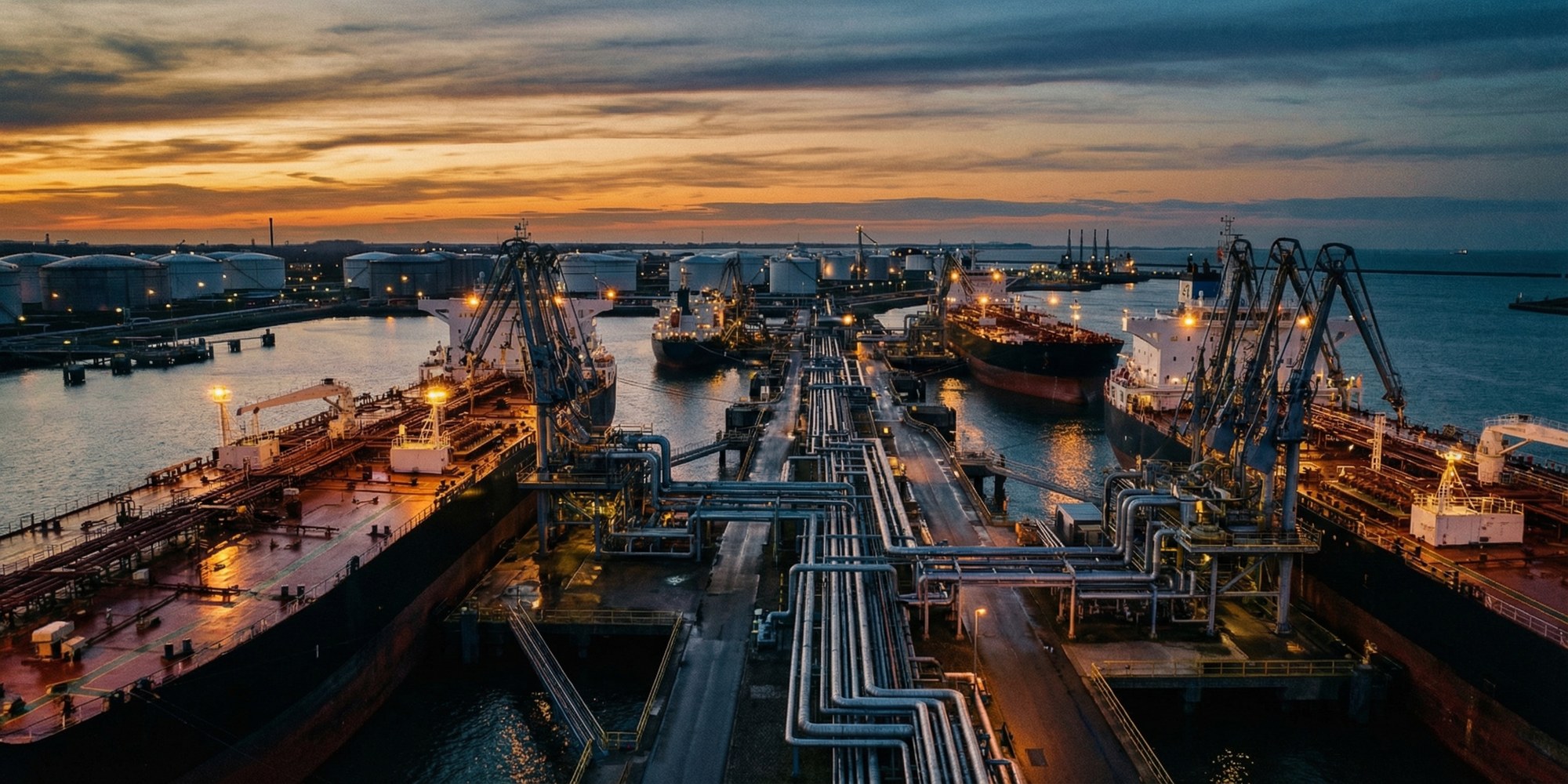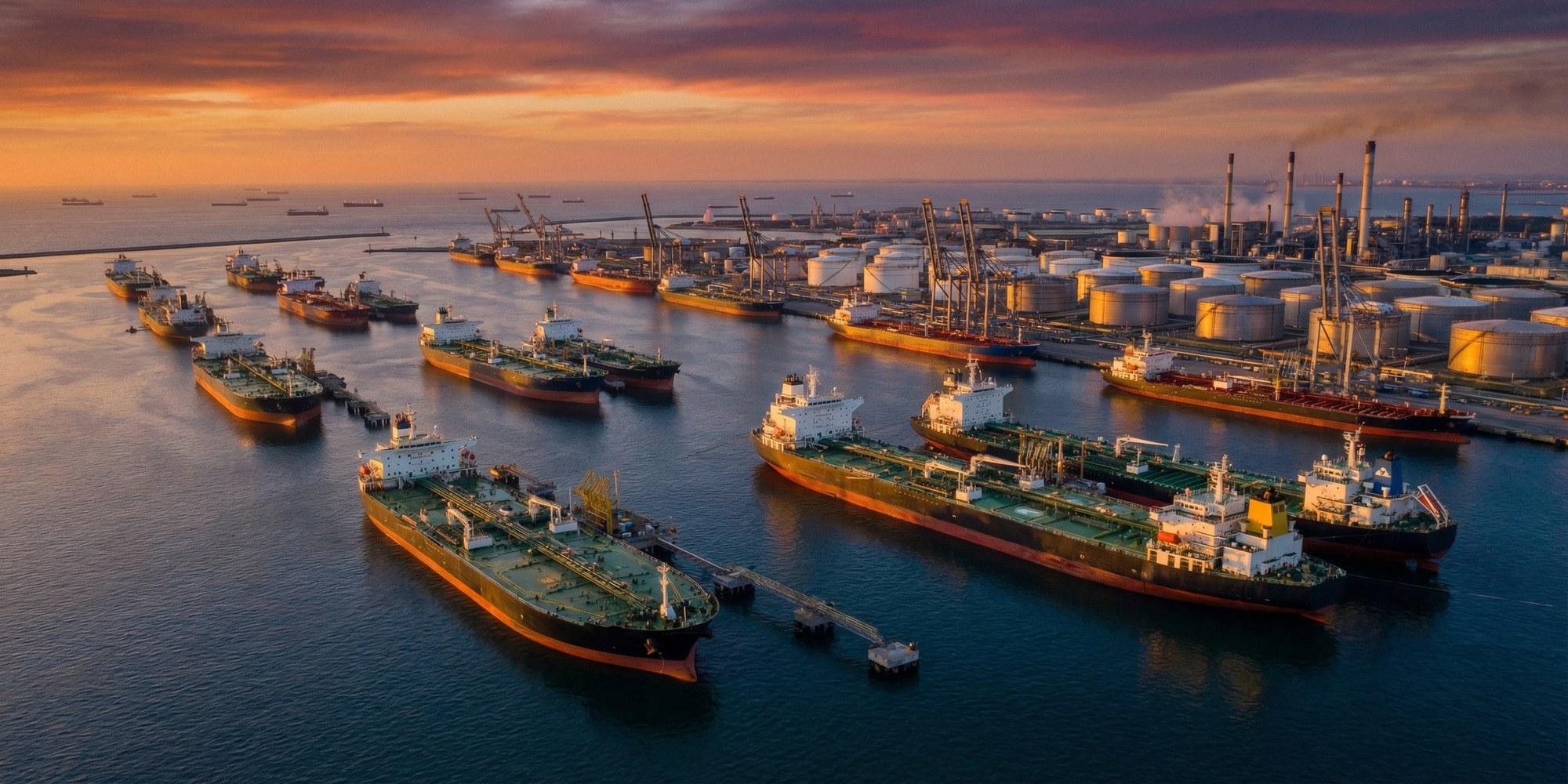
On March 6, U.S. Treasury Secretary Scott Bessent announced a narrow but consequential policy move: a 30-day waiver issued by the Office of Foreign Assets Control (OFAC) permitting Indian refiners to purchase Russian oil cargoes stranded at sea by the Strait of Hormuz disruption. The waiver — set to expire on April 4 — was framed explicitly as an emergency supply measure rather than a relaxation of the broader secondary sanctions architecture Washington has built around Moscow's petroleum trade since 2022. Yet its issuance, alongside reports that Bessent is simultaneously preparing to press Beijing to curtail purchases of both Iranian and Russian crude, signals something more significant: the Trump administration is now actively managing a two-track sanctions policy, granting selectively to partners it deems redeemable while intensifying structural pressure on those it does not.
The immediate trigger was the blockade of the Strait of Hormuz. Since U.S. and Israeli strikes began on February 28, Iran has periodically disrupted the narrow chokepoint through which roughly 20 percent of global crude oil consumed worldwide passes, according to the U.S. Energy Information Administration. For India — which holds only weeks of crude reserves compared to China's months-long buffer — the impact has been acute: liquefied petroleum gas prices have been hiked, LNG rationing introduced, and the rupee has hovered near record lows as energy import costs surge.
Key Takeaways
- The U.S. OFAC issued India a 30-day waiver on March 6 allowing purchase of stranded Russian oil cargoes; the measure expires April 4 and covers only existing shipments, not new orders.
- Treasury Secretary Bessent is simultaneously preparing to ask China to reduce oil purchases from Iran and Russia during a mid-March meeting with Chinese Vice Premier He Lifeng in Paris.
- China absorbs over 80 percent of Iran's crude exports, making any meaningful curb on Tehran's oil revenue contingent on Beijing's cooperation — cooperation Washington cannot compel through secondary sanctions alone.
- OFAC sanctioned more than 30 individuals, entities, and vessels in late February 2026 as part of its ongoing maximum pressure campaign against Iran's shadow fleet and weapons networks.
The India Exception: Emergency Relief, Not Sanctions Relaxation
The OFAC waiver is technically limited in scope. It permits Indian refiners to reroute Russian oil vessels already at sea — cargoes that would otherwise be left without viable port destinations due to Hormuz disruption — to Indian ports. The measure does not apply to any new shipments of Russian oil and carries no implication of a broader softening toward Moscow's petroleum sector. Bessent said the waiver "will not provide significant financial benefit to the Russian government," characterizing it as addressing an acute one-off supply emergency rather than setting any precedent.
India's largest private refiner, Reliance Industries, moved quickly to take advantage of the waiver, according to Bloomberg reporting cited by Euronews, seeking Russian crude cargoes for its domestic market refinery while continuing to run its export-oriented facilities on non-Russian grades. The dual-track approach by Reliance mirrors, in microcosm, the diplomatic tightrope New Delhi itself is walking: drawing on emergency U.S. flexibility without fully committing to the American-aligned energy framework Bessent hopes to lock in once the crisis passes. Bessent has signaled that India is expected to increase purchases of American crude once the immediate emergency subsides — a quid pro quo implicit in the short duration of the waiver. The currency and equity market stress India is experiencing has reverberated through global financial markets even as Iran ceasefire signals briefly stabilized sentiment, underscoring how tightly linked the crisis has become to macroeconomic conditions far beyond the Gulf.
"Iran exploits financial systems to sell illicit oil, launder the proceeds, procure components for its nuclear and conventional weapons programs, and support its terrorist proxies. Under President Trump's strong leadership, Treasury will continue to put maximum pressure on Iran."
— U.S. Treasury Secretary Scott Bessent, OFAC press release, February 2026
The China Problem: Pressure Without Leverage
The more strategically consequential element of the two-track approach is what Washington is attempting with China. According to reporting by the Wall Street Journal, confirmed by Reuters on March 5, Bessent is weighing a request to Chinese Vice Premier He Lifeng — in a mid-March meeting in Paris designed to lay groundwork for President Trump's planned April summit with Xi Jinping — that Beijing reduce its oil purchases from both Iran and Russia. The talks are also expected to cover expanded Chinese purchases of U.S. soybeans and Boeing aircraft, and potential easing of rare-earth export controls in exchange for movement on AI chip import restrictions.
The strategic logic for Washington is clear: China absorbs more than 80 percent of Iran's crude exports, according to data platform Kpler, as reported by Deutsche Welle. Iran, Russia, and Venezuela — all under heavy U.S. sanctions — collectively supply Beijing with deeply discounted barrels, enabling China to run its economy on a cheaper energy diet while depriving the sanctioned states of higher-margin revenues. If Washington's goal is genuinely to strangle Iran's petroleum revenues, Chinese cooperation is not optional. Yet the leverage available to Washington here is far more limited than the secondary sanctions framework implies on paper. China is the world's largest oil importer and its economy's energy security is a core political priority for the Communist Party; no formulation of secondary sanctions threats has yet altered Beijing's willingness to absorb sanctioned crude at a discount.
The broader market turbulence triggered by the Iran conflict — with the euro retreating and the yen firming as a safe-haven currency — has itself complicated the diplomatic calculus, as higher energy costs feed into inflation expectations that both Beijing and Washington are trying to manage domestically.
The Shadow Fleet Campaign and Its Limits
Washington's frustration with China's role as a backstop for sanctioned oil producers is not new. In late February 2026, OFAC designated over 30 individuals, entities, and vessels enabling illicit Iranian petroleum sales and Iran's ballistic missile and advanced conventional weapons production — acting under Executive Orders 13902, 13382, and 13949. The State Department acted in parallel, identifying 14 additional shadow fleet vessels under its own authorities. The actions were framed as part of the administration's "maximum pressure" campaign against Iran, consistent with National Security Presidential Memorandum 2 (NSPM-2). In total, OFAC sanctioned more than 875 persons, vessels, and aircraft in 2025 as part of this campaign.
Yet the shadow fleet infrastructure persists precisely because its primary customers — Chinese teapot refineries and state-adjacent trading houses — operate in a jurisdiction where U.S. OFAC designations carry limited direct enforcement weight. Washington can sanction the vessels and the operators. It cannot sanction the ports where the oil is unloaded without triggering a broader confrontation with China that would dwarf the Iran conflict itself. This fundamental asymmetry — extensive designation authority, limited end-user enforcement — is the structural ceiling of maximum pressure sanctions policy when the target economy's primary trade partner is a major power unwilling to comply.
Implications for the Sanctions Architecture
The two-track approach Washington is now pursuing — waiver for India, pressure on China — reflects an implicit acknowledgment of this ceiling. By offering India a temporary carve-out tied to future American crude purchases, the Treasury is attempting to convert an emergency measure into a long-term market redirection, pulling one of Iran's remaining potential customers toward a U.S.-aligned energy supply chain. Whether India will comply with the implicit expectation once its immediate supply emergency eases is far from certain; New Delhi's tradition of strategic autonomy and its interest in maintaining access to discounted energy runs directly counter to the alignment Washington seeks.
With the Bessent-He Lifeng meeting expected in mid-March and the Trump-Xi summit penciled in for late March in China, the next several weeks will test whether any of this diplomatic architecture can translate into meaningful behavioral change by Beijing. Analysts who have closely tracked secondary sanctions enforcement are skeptical that China will agree to any binding commitment on Iranian or Russian oil purchases. What is more likely is a set of ambiguous, sequenced concessions — more American soybeans, fewer explicit secondary sanctions designations of Chinese entities — that allows both sides to claim partial success without resolving the underlying structural problem Washington faces in enforcing a sanctions regime whose most critical backstop refuses to comply.
The India waiver and the China pressure campaign are oil sanctions rewritten as a Hormuz supply emergency — the same strait-driven enforcement problem documented on the Armed Conflicts Map's Strait of Hormuz crisis page.