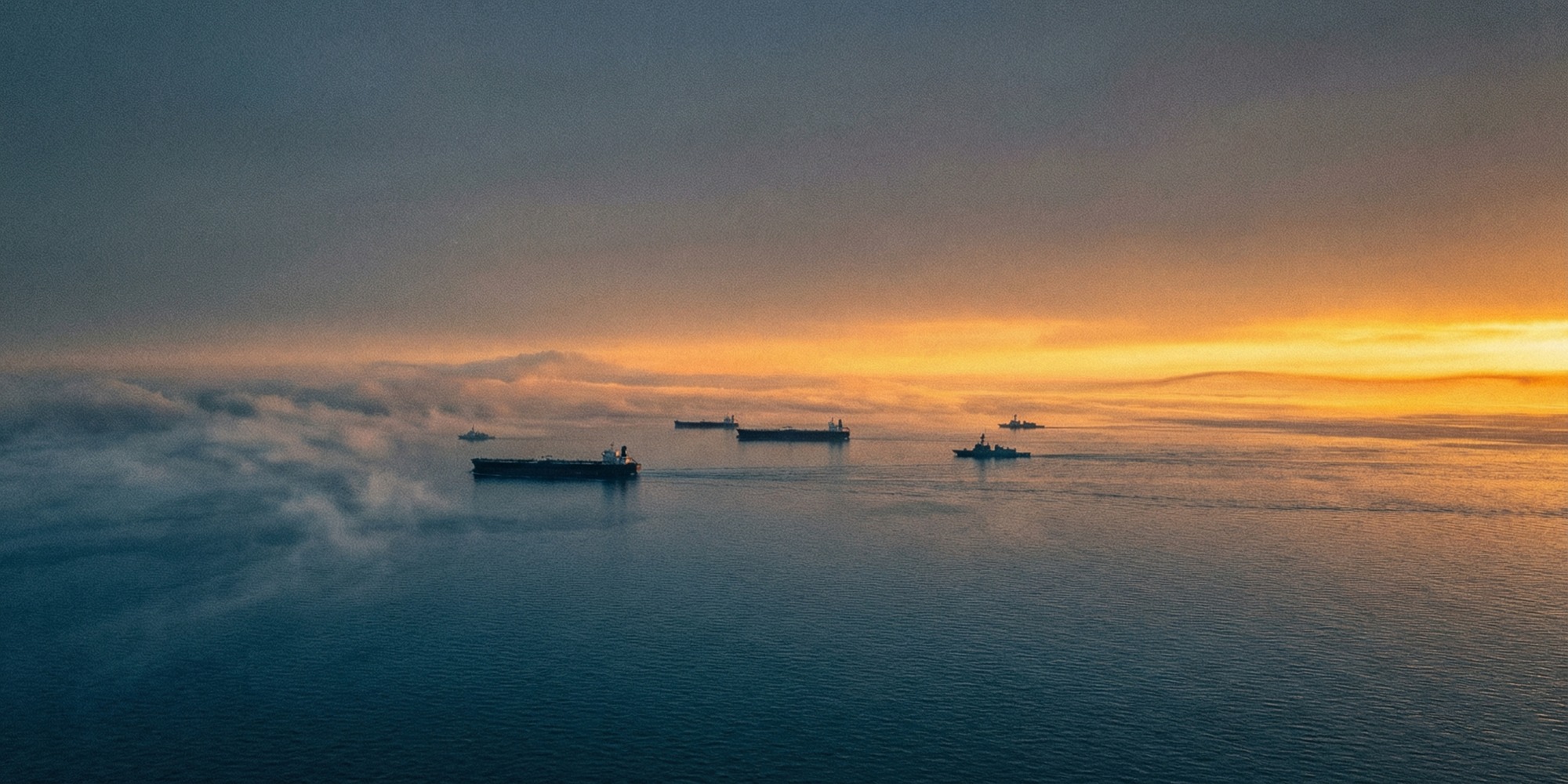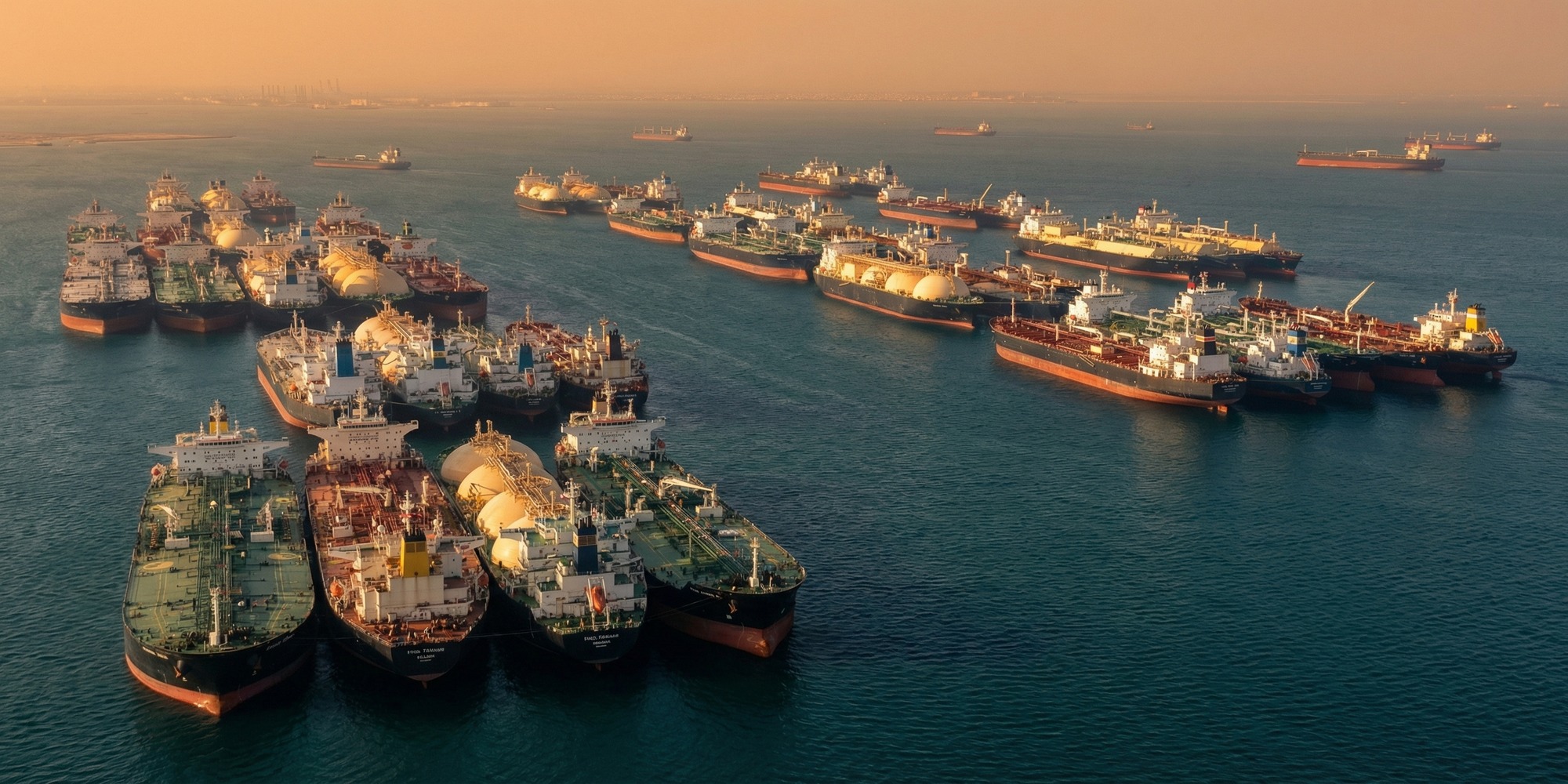
On the morning of March 27, 2026, Malaysian Prime Minister Anwar Ibrahim confirmed what trading capitals from Tokyo to Rotterdam had been anxiously watching for: Iranian authorities had granted clearance to Malaysian oil tankers to pass through the Strait of Hormuz. The announcement, made in Kuala Lumpur and immediately reported by Al Jazeera, was not merely a bilateral shipping update. It was the first formally confirmed instance of Tehran's emerging selective access regime — a system in which Iran controls who transits the world's most critical energy chokepoint not through blanket closure, but through discriminatory permission.
Iran is no longer simply threatening to close the Strait of Hormuz. It has begun operating a de facto toll booth — and the implications for the legal architecture of global maritime trade are as significant as the immediate disruption to energy markets. The strait carries approximately 20 percent of the world's oil and liquefied natural gas in normal conditions. As of late March 2026, those conditions no longer apply.
Key Takeaways
- Iran is implementing a selective maritime access regime at the Strait of Hormuz, granting passage to "friendly" nations while blocking others — a toll-booth model without modern precedent.
- Malaysia became the first confirmed beneficiary on March 27, following Kuala Lumpur's diplomatic neutrality toward the conflict with the US and Israel.
- Iranian parliamentarians are drafting legislation to formally charge transit tolls, transforming what began as a military blockade into a structured economic instrument.
- The UAE has agreed to join a Western-led multinational maritime taskforce to reopen the strait, even as Iranian drone strikes have struck UAE installations.
How the Toll Booth Works
Iran's selective access criteria have become clearer over the weeks since the conflict began on February 28. According to analysis from the Reuters Global Markets desk and reporting by the Associated Press, Tehran appears to be applying three criteria when granting or denying passage: whether the flag state has formally condemned the US-Israeli strikes on Iran; whether the country maintains diplomatic relations characterized as neutral or friendly toward Tehran; and whether the cargo is destined for nations participating in Western sanctions enforcement against Iranian oil exports.
Malaysia fits the profile of a permitted nation on all three counts. Kuala Lumpur has not formally condemned Iran, maintains long-standing commercial ties with Tehran, and is not part of the US-led secondary sanctions regime targeting Iranian crude. The clearance of Malaysian vessels sets a precedent with immediate commercial consequences: it signals that diplomatic neutrality is now a tradeable commodity in the Hormuz market.
The escalatory dimension arrived in a separate development on March 27, when Israel announced it had killed Iran's navy chief — the commander overseeing the Hormuz blockade operations — along with several senior naval command officers. The operational impact of that strike on the selective access system's administration remains unclear, but it represents a direct challenge to Tehran's capacity to manage the mechanism it has constructed.
Meanwhile, Iranian parliamentarians announced plans to draft legislation formally charging transit tolls on commercial vessels, as reported by Al Jazeera on March 26. The legislative move is significant: it signals that Iran is attempting to convert a wartime military posture into a permanent institutional instrument — a formalized tribute system embedded in Iranian domestic law.
"Iran lawmakers plan to collect tolls for transiting ships."
— Al Jazeera, reporting on Iranian parliamentary proceedings, March 26, 2026
The Legal Challenge to UNCLOS
Iran's selective access regime places it in direct confrontation with the United Nations Convention on the Law of the Sea (UNCLOS), specifically Article 38, which guarantees all ships the right of transit passage through international straits used for international navigation. Iran is a signatory to UNCLOS. The Strait of Hormuz, shared between Iran and Oman, falls within this category of international strait — its legal status is not materially in dispute.
Tehran's counter-argument draws on the wartime context: Iranian officials have asserted that the strait runs partly through Iranian territorial waters, and that during active hostilities Iran retains the right to define which vessels constitute "hostile" traffic. Legal scholars and the International Maritime Organization (IMO), which has issued emergency navigation advisories, have disputed this framing. The UN Secretary-General has called for the full restoration of innocent passage rights.
The United States finds itself in an awkward legal position: Washington has never ratified UNCLOS, relying instead on customary international law protections for freedom of navigation. That non-ratification undermines the coherence of the Western legal counter-argument. Iran can note, with some accuracy, that the world's most powerful maritime nation has declined to subject itself to the very treaty framework it now invokes against Tehran's actions.
This is not the first time Iran has threatened Hormuz closure. In 2012 and again in 2019, Tehran made similar declarations during periods of sanctions escalation — but never operationalized them. What distinguishes March 2026 from those episodes is the move from threat to partial implementation. The toll-booth system is functioning. The legislative infrastructure is being drafted. The precedent, once set in practice, is far harder to reverse than a threat that was never acted upon.
The Western Counter — UAE, Taskforce, and Trump's New Deadline
The most significant Western counter-move came on March 27 when the Financial Times reported, citing people familiar with the discussions, that the UAE had agreed to join a multinational maritime taskforce aimed at restoring free passage through the Strait of Hormuz. The UAE's participation is geopolitically freighted: Abu Dhabi is simultaneously a target of Iranian drone strikes and a prospective co-enforcer of the maritime coalition seeking to neutralize Iran's blockade. That duality reflects the extraordinary position Gulf states occupy in this conflict — geographically and commercially intertwined with Iran, yet strategically aligned with the Western powers seeking to reverse Tehran's chokehold.
President Trump issued a new ten-day deadline on March 27 for a potential strike on Iranian energy infrastructure if diplomatic talks do not yield results, according to Al Jazeera. The deadline echoes earlier ultimatums in the conflict's escalation cycle, including Trump's March 21 threat to strike Iranian power plants. What remains unclear is whether a forced military reopening of the strait would itself survive Iran's counter-responses — particularly its stated threat, recorded in the Defence Council's deliberations, to mine the entire Persian Gulf if the US strikes coastal infrastructure.
For financial markets, the sustained uncertainty is already registering sharply. Brent crude has risen approximately 40 percent since the conflict began in late February, and LNG spot prices have surged 67 percent, according to a Norges Bank policy brief. As US Treasury yields have surged amid deepening uncertainty over Hormuz access, the Federal Reserve faces a policy dilemma between war-driven inflation and the recessionary drag of sustained energy disruption. Meanwhile, global oil markets have registered the disruption sharply, with Sri Lanka declaring a fuel emergency and the Philippines announcing a national energy crisis as Hormuz-dependent supply chains fracture.
The Implications: Diplomatic Neutrality as Market Access
Iran's selective access regime represents a genuinely novel form of coercive economic diplomacy. The toll-booth model bifurcates global trade into two parallel maritime lanes: one available to nations that have withheld from formally condemning Iran or joining sanctions enforcement, and one effectively closed to nations that have aligned with the Western sanctions architecture. For the first time in the post-World War II maritime order, a state is systematically conditioning access to an international strait on the political positions of the flag nation.
The International Energy Agency has called for the release of emergency strategic petroleum reserves to buffer supply disruptions. But reserve releases address price symptoms, not the underlying access problem. The deeper question is structural: whether the multilateral system for guaranteeing free maritime transit — built over eight decades through UNCLOS, IMO conventions, and naval deterrence — can accommodate a scenario in which a major energy transit state successfully operationalizes discriminatory access over an extended period.
If it cannot, the Malaysia precedent will not remain an isolated diplomatic accommodation. It will become a model: the price of passage through Hormuz, paid not in tolls but in political allegiance.
Conclusion: Precedents That Outlast Wars
Iran's Hormuz toll booth may ultimately prove temporary. A forced military reopening, a negotiated ceasefire, or the gradual erosion of Tehran's operational capacity could restore conventional transit within weeks. But the legal and diplomatic precedents being established in March 2026 will outlast whatever end-state the conflict eventually reaches. The proposition that a treaty signatory can selectively deny innocent passage based on the political alignment of the flag state — and draft legislation to institutionalize that denial — has now been tested in practice rather than in theory. How the international community responds in the coming days and weeks will determine whether the Strait of Hormuz remains an international waterway in any meaningful sense, or becomes something else: a politically managed access point where the right of transit must be earned, not assumed.
Selective access — who gets through, who pays, and who waits — is the same Hormuz toll-booth regime documented on the Armed Conflicts Map's Strait of Hormuz crisis page.
The tanker-traffic count behind that selective-access pattern — dark crossings and Iranian-controlled lanes — is on OilRoutes’ Hormuz tanker-traffic note.