On the thirty-first day of the US-Israeli air campaign against Iran, President Donald Trump gave the Financial Times an interview that immediately sent Brent crude to $116 per barrel — its highest level since the conflict began in late February. The subject was Kharg Island, a low-lying sliver of land roughly 25 kilometres off the Iranian coast in the Persian Gulf, and through which approximately 90 percent of Iran's oil exports flow. Trump's message was deceptively simple: "Maybe we take Kharg Island, maybe we don't. It would also mean we had to be there for a while."
The statement landed on a day already dense with escalatory signals. Iranian authorities confirmed the death of IRGC Naval commander Alireza Tangsiri, four days after Al Jazeera reported he had been targeted by Israeli strikes. Kuwait reported that an Iranian drone had struck a power and desalination plant, killing one worker, with the Kuwait National Guard intercepting five further drones over a twelve-hour period. The war, now entering its fifth week, had long ago ceased to be purely aerial — it was becoming a war of infrastructure, supply chains, and economic coercion. Trump's Kharg Island gambit sits at the intersection of all three.
Key Takeaways
- Trump told the Financial Times the US is actively considering seizing Kharg Island, the terminal handling 90% of Iran's oil exports, framing it as "taking the oil."
- Brent crude reached $116 per barrel on the announcement — the highest level since the conflict began — amplifying the war's economic shock to global energy markets.
- Military analysts warn that seizing Kharg would not end Iran's ability to threaten Gulf shipping: Iran retains coastal missile batteries, IRGC naval forces, and proxy networks beyond the island's perimeter.
- The simultaneous "deal could be made very quickly" framing suggests the Kharg threat functions primarily as coercive leverage ahead of the April 6 diplomatic deadline, not an operational order.
What Kharg Is — and Why It Was Deliberately Spared
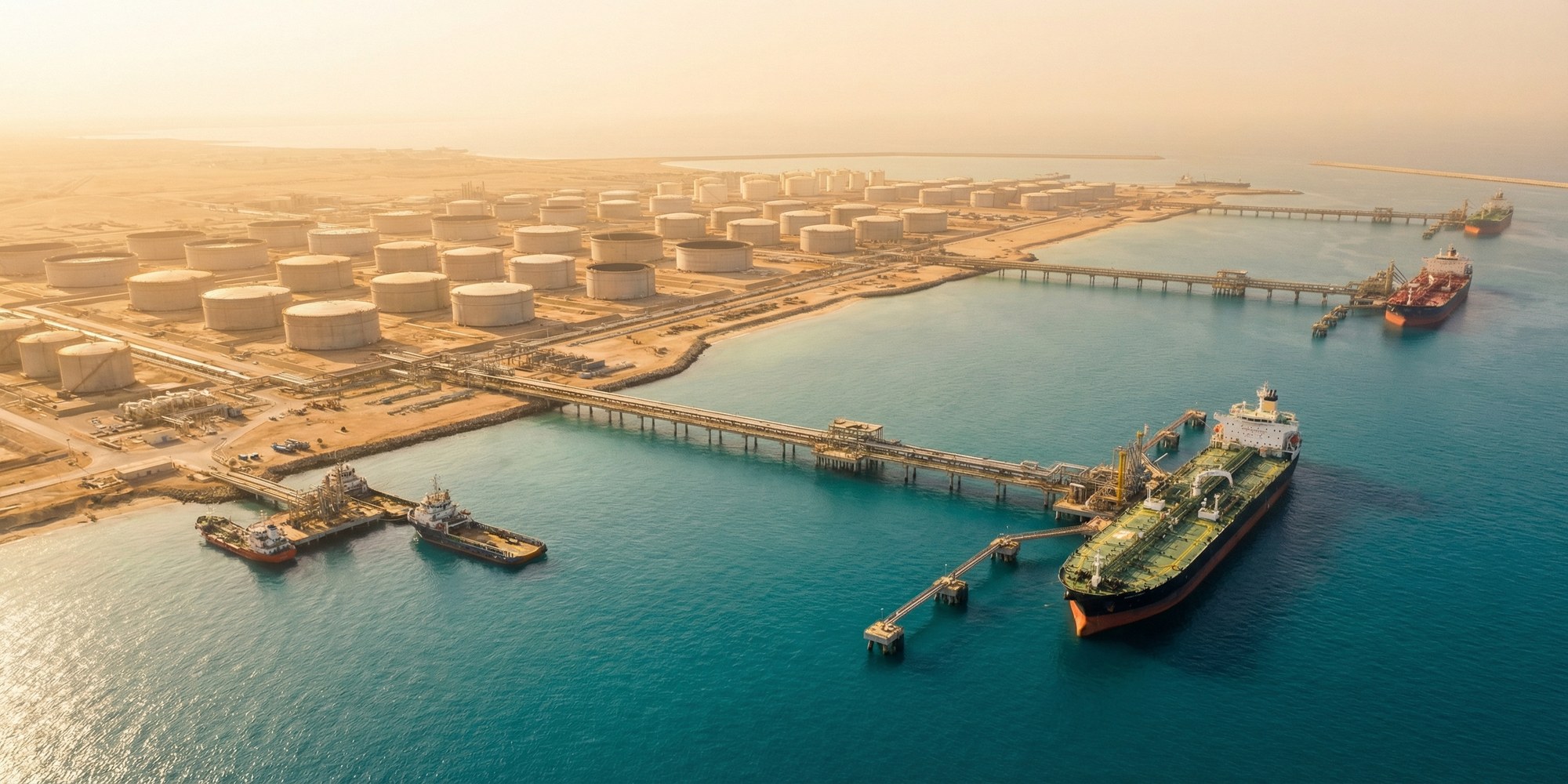
Kharg Island's strategic value is not military — it has no significant defensive fortifications. Its value is almost purely economic. The island functions as Iran's primary crude oil loading terminal: supertankers berth at its offshore jetties, take on Iranian crude, and distribute it across Asian markets, primarily to China and India. Destroying or seizing Kharg would, in theory, sever the principal artery of Iranian oil revenue in a single operation.
This is precisely why it has not already been destroyed. On March 13, Trump posted on Truth Social that US and Israeli forces had "totally obliterated" military targets on Kharg Island but had "chosen NOT to wipe out Oil infrastructure." The deliberate sparing was not restraint for its own sake — it was economic leverage calculus. A destroyed Kharg produces nothing. A threatened but intact Kharg is a bargaining chip. As the Reuters reporting on the region has consistently noted, the Trump administration has been threading an approach in which Iran's oil infrastructure is held hostage to diplomatic outcomes, not destroyed outright. The FT interview represents an escalation of that threat to its logical extreme: not just the threat of destruction, but the threat of expropriation.
Trump explicitly reached for the Venezuela analogy, referencing the January 2026 operation in which US forces assisted Venezuelan opposition forces in ousting Nicolás Maduro and assumed operational control of PDVSA's oil assets. "It would also mean we had to be there for a while," he acknowledged — a rare concession to the operational complexity of what he was proposing.
"Maybe we take Kharg Island, maybe we don't. It would also mean we had to be there for a while."
— President Donald Trump, Financial Times interview, March 30, 2026
Why Seizure Is Harder Than Venezuela
The Venezuela comparison illuminates the gap between aspiration and operational reality. Venezuela's military, hollowed out by years of sanctions and defections, offered negligible resistance to a US-backed regime change. Iran is a different proposition entirely. Nick Marsh, reporting for the BBC from Singapore, framed the core problem clearly: even a US-controlled Kharg Island would leave tankers "at the mercy of Iranian attacks as they are now." Iran's ability to threaten Gulf shipping does not reside on Kharg Island — it resides in coastal missile batteries along the Iranian mainland, IRGC naval forces equipped with drone swarms and anti-ship missiles, and proxy networks extending from Yemen to southern Iraq.
Seizure of Kharg would require, by Trump's own admission, a prolonged US ground presence. Pentagon briefings, reported anonymously by multiple outlets, confirm preparations for "weeks of US ground operations." Thousands of US Marines are already positioned in the region; special forces and paratroopers are reportedly en route. The logistical chain exists. What remains politically contested is the trigger — specifically, whether Congress must authorise a ground operation of this scale under the War Powers Resolution. Several Republican lawmakers have already signalled that deploying ground forces to seize Iranian sovereign territory crosses a threshold requiring a congressional vote, regardless of presidential authority.
The international law dimension compounds the problem. Seizure of Kharg Island would constitute an act of war against a sovereign nation under any conventional reading of international law. Unlike the Venezuela operation — achieved through regime change at the invitation of a recognised successor government — a forced seizure of Iranian oil infrastructure has no comparable legal architecture available to it. As US Foreign Policy has reported, the internal Washington debate over the legal authorities for escalatory action against Iran has been running in parallel with the military planning, with no settled resolution as of late March.
The Gulf Under Fire
The broader regional context on March 30 illustrates why the economic coercion logic of the Kharg threat is not merely theoretical. The war has already reached Gulf civilian infrastructure in ways that carry systemic food and water security implications. Kuwait's power and desalination plant strike was not an isolated incident: Qatar's Ras Laffan LNG complex was struck earlier in March after Israel targeted Iran's South Pars gas field, and analysts tracking tit-for-tat escalation patterns have documented a systematic Iranian strategy of striking Gulf desalination infrastructure in response to each major attack on Iranian energy assets.
The stakes are staggering. Ninety percent of Gulf states' drinking water is produced by desalination plants, according to BBC correspondent Katy Watson reporting from Doha. Lars Jenssen, CEO of Vespucci Maritime, told BBC Radio 4's Today programme that 20 to 30 percent of the world's seaborne fertiliser originates in the Gulf — warning of "rapidly escalating food prices, especially in poorer countries" if the conflict continues to target export infrastructure. UK Prime Minister Keir Starmer convened an emergency meeting of energy, shipping, and financial services leaders at Downing Street to assess the economic exposure — a signal that the war's second-order effects are now registering as a domestic political emergency across allied capitals.
The death of IRGC Naval commander Alireza Tangsiri adds a further dimension. Tangsiri — sanctioned by the US Treasury in 2019 after Iran shot down an American surveillance drone — had been the officer directly responsible for overseeing passage through the Strait of Hormuz. The IRGC's statement, carried by Tasnim News Agency, vowed that forces would "not rest until the enemy is completely destroyed" — even as it acknowledged Tangsiri had died "due to the severity of his injuries." His elimination marks a significant decapitation of IRGC naval command, though analysts caution that Iranian succession planning for key commanders has been under way since the conflict began.
The impact on US and global financial markets has been immediate. Analysts tracking US markets have noted that defense and energy stocks surged on the Kharg Island announcement, while broader equities fell on recession fears driven by sustained high energy costs. Global market analysts have documented a corresponding flight from equities to money markets, gold, and short-dated Treasuries — a flight-to-safety pattern last seen at this intensity in March 2020.
Leverage or Launch Order?
The most analytically important feature of Trump's FT interview was not the Kharg Island threat itself — it was the simultaneous framing: "a deal could be made very quickly." The two statements are not contradictory. They are the architecture of maximum pressure negotiation: an explicit threat of economic expropriation combined with an open door to settlement. The timing is not coincidental. The interview was published exactly one week before the April 6 deadline that the Trump administration has repeatedly invoked as the point at which military options would be reassessed. Kharg Island seizure talk, viewed through this lens, is designed to maximise psychological pressure on Tehran in the final days before that marker.
Trump's 1988 precedent reinforces this interpretation. In a Guardian interview that year, a thirty-something real estate developer declared: "I'd do a number on Kharg Island. I'd go in and take it. Iran can't even beat Iraq, yet they push the United States around." The remark has circulated widely since the conflict began — evidence that the Kharg Island option has occupied a permanent place in Trump's strategic imagination for nearly four decades. Its invocation now carries the weight of a long-held conviction, but also the familiarity of a negotiating posture that has never previously been acted upon.
What is clear from thirty-one days of conflict is that the war has already produced the most significant oil price shock in years, a humanitarian infrastructure crisis across the Gulf, and the deliberate targeting of both sides' economic lifelines. Whether Kharg Island is seized, destroyed, or ultimately traded at the negotiating table, the threat has already done part of its intended work: at $116 per barrel, energy markets are pricing in a prolonged confrontation, and every day of that pricing is itself a form of economic coercion — on both Tehran and Washington's allies.
Whether Kharg is seized, destroyed, or used as leverage, the island is a wartime oil node on the same Iran campaign documented on the Armed Conflicts Map's Iran–US war tracker.