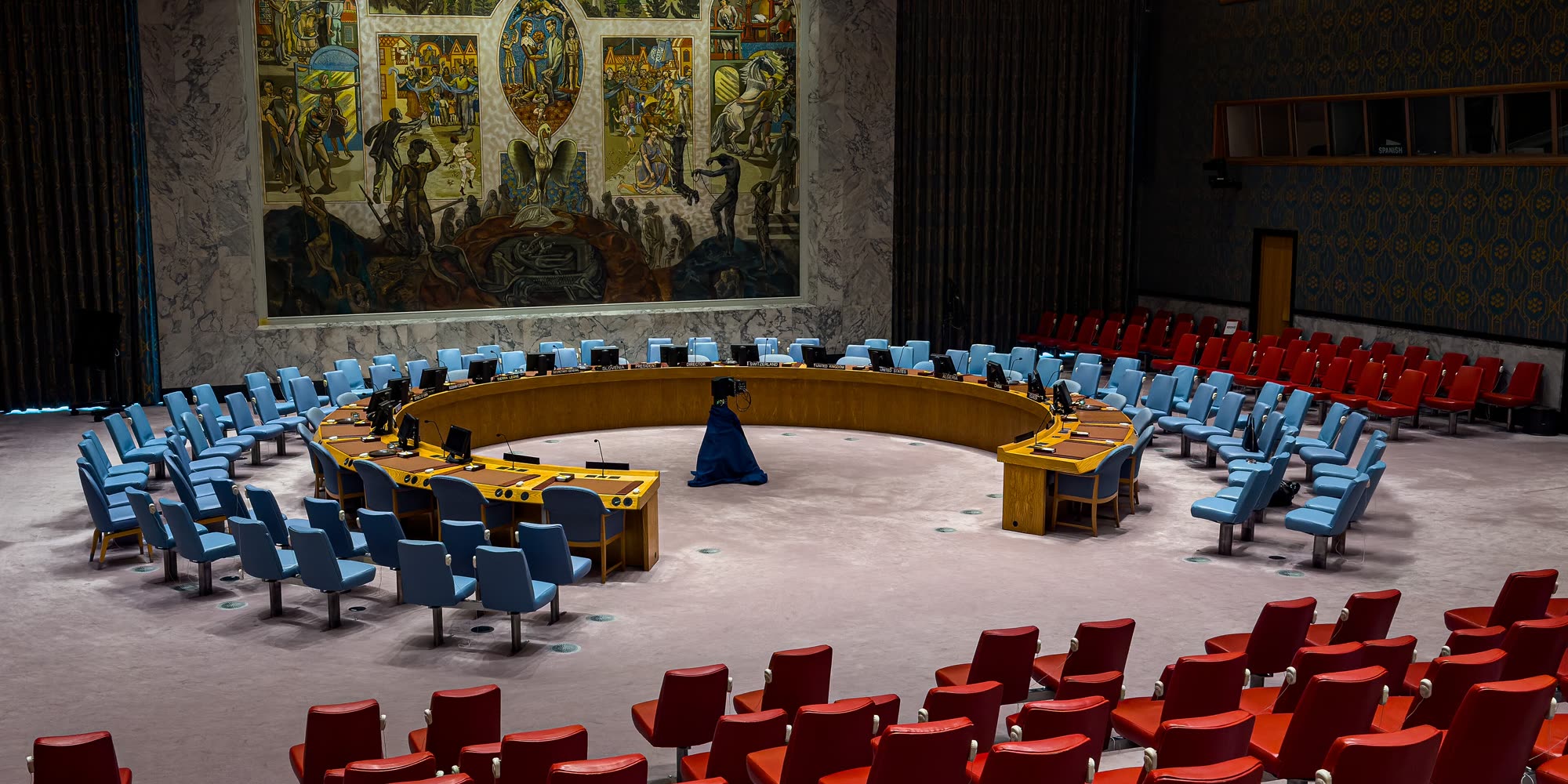
The General Assembly can keep a reform process alive without producing a Council. In July 2026 it did exactly that: adopting an oral decision without a vote to continue intergovernmental negotiations on Security Council reform through the eightieth session and to place the item on the eighty-first (UN Meetings Coverage, GA/12774). The Pact for the Future had already told members to treat this as urgent. The IGN still does not have a consolidated negotiating text.
What 2026 did produce is a missing piece that negotiators had asked for. The African Union submitted its reform model — the Common African Position drawn from the Ezulwini Consensus and the Sirte Declaration — into the IGN. The G4 (Brazil, Germany, India, and Japan) welcomed that submission on 20 April 2026 and said the process now had “all the essential elements to develop a consolidated model” (G4 statement, 20 April 2026). Essential elements are not a text.
Key Takeaways
- Pact for the Future actions 39–41 (A/RES/79/1, 22 September 2024) are the first agreed reform parameters since the 1960s enlargement.
- The African model entered the IGN in April 2026; the G4 called it compatible with a Council of “not less than 26.”
- A June 2026 co-chairs elements paper maps convergences and divergences; it is not a draft resolution.
- The Assembly’s July 2026 decision continues the IGN. It does not authorize text-based negotiations.
What the Pact Actually Committed
World leaders adopted the Pact for the Future at the Summit of the Future on 22 September 2024. Chapter 5, on transforming global governance, contains three Council actions. Action 39 commits members to reform the Security Council to make it “more representative, inclusive, transparent, efficient, effective, democratic and accountable.” Action 40 says they will strengthen IGN efforts “as a matter of priority and without delay.” Action 41 addresses the Council’s relationship with the General Assembly (Co-Chairs’ Elements Paper, 10 June 2026, quoting the Pact).
“We will reform the Security Council, recognizing the urgent need to make it more representative, inclusive, transparent, efficient, effective, democratic and accountable.”
— Pact for the Future, Action 39, as cited in the 10 June 2026 IGN elements paper
The co-chairs are right that this is the first time since the 1960s that members agreed “clear parameters for reform.” Parameters are a mandate. They are not a seat count, a veto rule, or a Charter amendment path. Those remain the five IGN clusters: size, categories of membership, regional representation, the veto, and the Council–Assembly relationship.
The African Model and the Missing Consolidated Text
The Pact encouraged members to submit models so the IGN could develop a consolidated model from convergences. Africa’s submission is the political event of the 2026 round because it puts the Common African Position on the same table as the G4 and other papers. The G4 said it shares the objective of expansion in both permanent and non-permanent categories and that Africa’s “not less than 26” is compatible with its own model. Japan, speaking for the G4 in July, also said the process “has not met the widespread expectations for Security Council reform for yet another year” (GA/12774).
Saint Lucia, speaking for a cross-regional group of developing countries at the same meeting, called a consolidated model “a mandate for the eighty-first session, not an aspiration to be deferred indefinitely.” That is the accurate tension. The oral decision keeps the IGN in being. It does not instruct the co-chairs to issue a draft article. Decision 79/570 of 25 August 2025 had already rolled the process forward on the basis of an elements paper. The June 2026 revision does the same: it records where members overlap and where they do not.
Charter amendment still sits behind any model. Article 108 requires two-thirds of the Assembly, including all five permanent members. A consolidated model that cannot survive a P5 veto is a speech. A model that waters the veto to win P5 consent is a different Council than the one Africa and the G4 describe. The IGN has not chosen which failure mode it prefers, which is why it can agree to continue.
Why Continuation Is Not Reform
This desk has treated other 2026 files as implementation tests: a High Seas Treaty that is in force and waiting for COP1, a WTO appellate tier that exists in the DSU and not in Geneva. Council reform is the inverse. The political mandate is written. The instrument is not. Continuing the IGN is the correct procedural move if the next session writes a consolidated model. It is delay if the eighty-first session produces another elements paper.
The metric to watch is narrow. Either the co-chairs are asked to circulate a consolidated model based on the African, G4, and other submissions, or they are not. Until that instruction exists, “priority and without delay” remains Pact language, not a calendar.

.jpg)