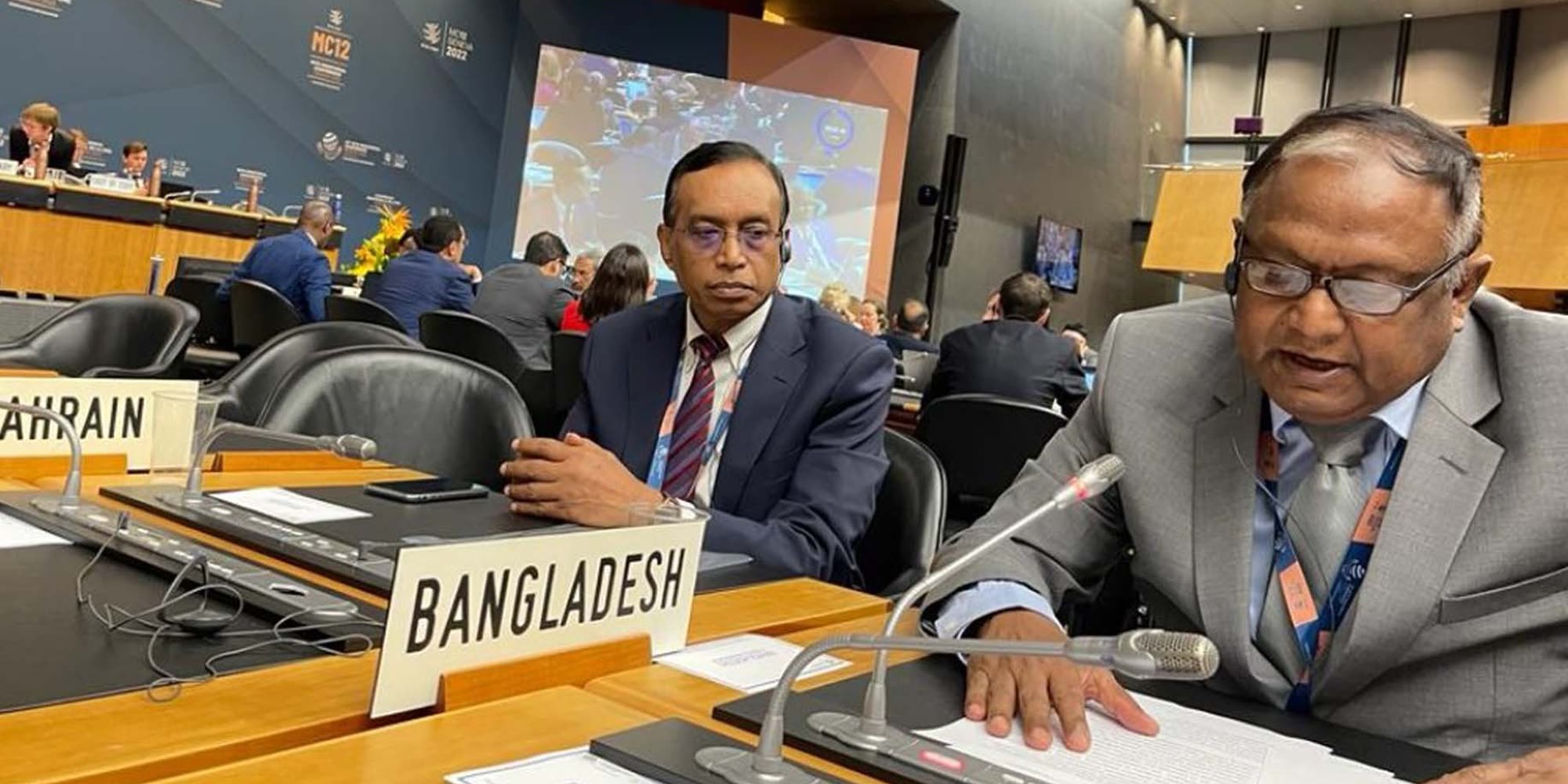
The World Trade Organization’s Appellate Body still has no members. The WTO’s own dispute-settlement page states the obvious: the Body “is unable to review appeals given its ongoing vacancies,” and “the term of the last sitting Appellate Body member expired on 30 November 2020” (WTO, Appellate Body). That is now a six-year vacancy, not a temporary staffing gap. What has grown in its place is a voluntary bridge — the Multi-Party Interim Appeal Arbitration Arrangement — and a quieter habit of settling or adopting panel reports without appeal.
On 28 March 2026, on the sidelines of the WTO’s 14th Ministerial Conference, Director-General Ngozi Okonjo-Iweala called the MPIA a “practical, confidence-building bridge” pending a reform deal (WTO news item, 28 March 2026). The phrase is careful. A bridge is not a court. It binds only those who stepped onto it.
Key Takeaways
- The Appellate Body has had no sitting members since 30 November 2020; Article 17 of the DSU still describes a seven-member standing body that does not exist.
- The MPIA, notified in 2020 under DSU Article 25, had 61 parties as of MC14 in March 2026.
- The Director-General cited 22 new disputes in two years, five panel reports adopted without appeal, and eight mutually agreed solutions.
- The United States remains outside the MPIA; so do several large traders. Legal certainty is now club-based.
What Was Designed, and What Is Running
Article 17 of the Understanding on Rules and Procedures Governing the Settlement of Disputes created a standing seven-person Appellate Body in Geneva. Reports are adopted by the Dispute Settlement Body unless every member decides otherwise — reverse consensus, the feature that made WTO law feel like law. That mechanism assumed a Body that could hear the appeal. When appointments were blocked, the appeal-into-the-void option appeared: a losing party files an appeal that cannot be heard, and the panel report is never adopted.
The MPIA was the counter-design. A group of members notified the DSB in April 2020 that they would use DSU Article 25 arbitration to replicate a two-step process among themselves until the Body was restored. The arrangement was always described as temporary. The March 2026 joint statement of MPIA parties repeated that a “reformed WTO dispute settlement system remains our priority objective,” and encouraged others to join rather than to treat the club as a substitute court (WTO, 28 March 2026).
“This reflects a quiet trend we have seen since the Appellate Body became inoperative in 2019: members have explored different approaches to reach mutually acceptable outcomes.”
— Director-General Ngozi Okonjo-Iweala, MPIA meeting at MC14, 28 March 2026
The 2026 Geometry: 61 Inside, the Rest Adjacent
Sixty-one members is about a third of the WTO. Barbados, Liechtenstein, and Moldova were the latest joiners noted at MC14. Two MPIA appeals have been completed. That is not a caseload that replaces a standing Body. It is proof of concept for a subset. The Director-General’s other numbers are the more important ones for the system as a whole: members are still filing cases, some are taking panel reports as final, and some are settling. The DSU is being used as a negotiation architecture even where the appellate tier is missing.
The limit is political alignment. The MPIA’s no-appeal-into-the-void pledge applies only between participants. A dispute that pairs an MPIA party with a non-party can still disappear into a void appeal. The United States is not in the arrangement. Neither are several other large traders. For those pairs, the 1995 design is a panel plus an optional dead end.
Reform talks have not closed that gap. The US position, stated across successive ministerials, has treated a standing, automatic appellate review as the problem to be narrowed, not restored. MPIA parties treat restoration of a two-tier system as the objective and the arrangement as a bridge. Those two sentences have not been reconciled. MC14 produced a description of the bridge, not a date for the far bank.
Why the Vacancy Is Still the Story
Trade lawyers can live with workarounds. The diplomatic cost is that WTO findings now have two grades of finality: adopted among the willing, and contingent everywhere else. That is a weaker signal for sanctions-adjacent tariff fights and for any government that needs a multilateral stamp before it walks back a measure. It is also why this file belongs next to other 2026 implementation tests — a High Seas Treaty that is in force but not yet institutionalized, a Security Council reform process that has models but not a text.
The Appellate Body’s page has not changed its essential sentence since 2020. Until appointments resume, the accurate description of WTO dispute settlement is not “broken.” It is “tiered by club.” That is a design, even if nobody voted it as one.
.jpg)